Your Guide to Singapore's Car Scrapyards: Selling, Buying, and Eco-Friendly Recycling
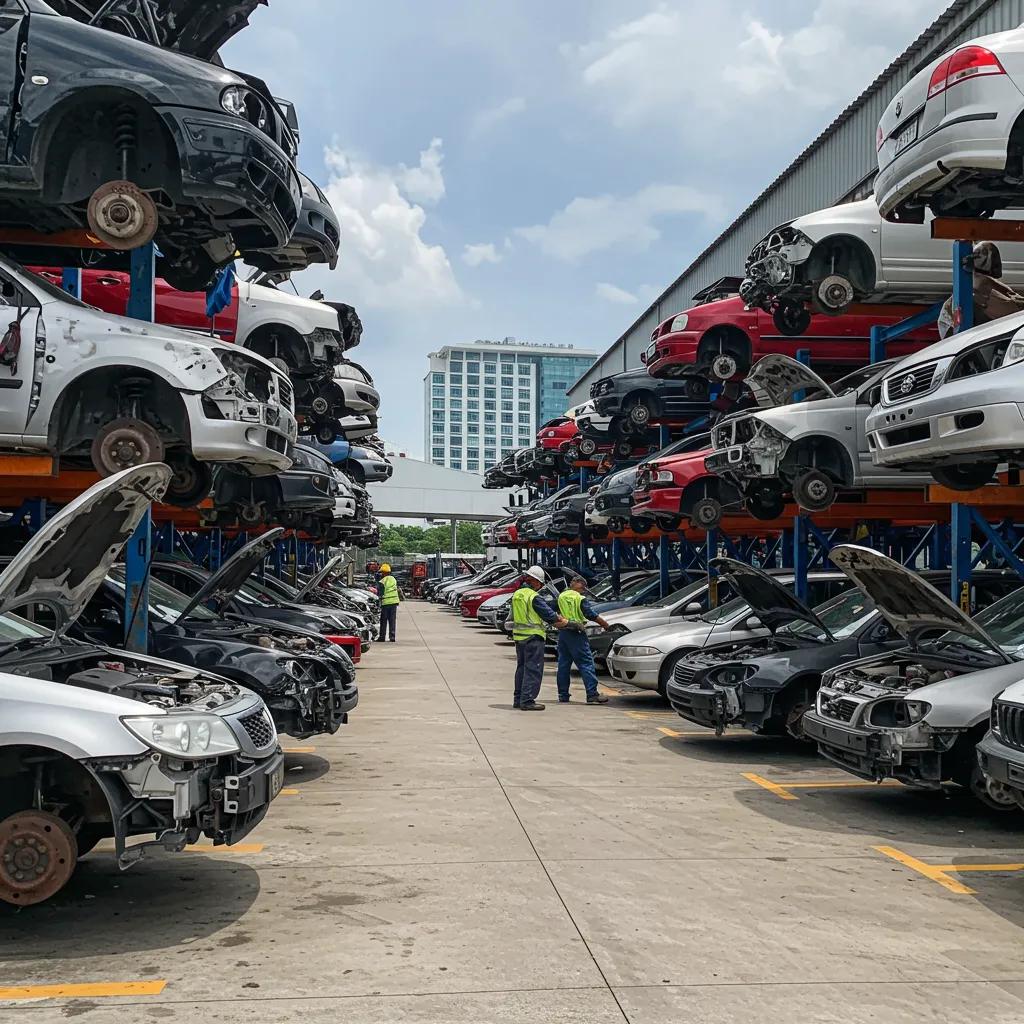
A car scrapyard in Singapore is a specialised facility dedicated to processing vehicles that have reached the end of their operational life. These yards expertly extract reusable parts, conduct essential de-pollution procedures, and recycle remaining materials to recover value and minimise environmental impact. This comprehensive guide walks you through the entire journey: how to scrap your car, where to sell your end-of-life vehicle for the best possible returns, how to find quality used car parts, the detailed process of dismantling and de-pollution, and the essentials of international export. You’ll discover practical steps, the necessary paperwork, key valuation drivers like COE and PARF, and crucial inspection criteria for buying used components. We aim to provide clear, actionable advice for sellers, workshops, and international buyers, promoting informed decisions and responsible recycling practices. Throughout this guide, we’ve integrated terms like “scrap car value Singapore,” “scrap yard car,” and “used auto parts Singapore price” to directly address common search queries and offer quick, helpful answers.
How Do You Scrap Your Car in Singapore? A Step-by-Step Breakdown
Scrapping a car in Singapore means officially removing it from the road, carefully salvaging usable parts, and ensuring all hazardous materials are handled responsibly to protect the environment and recoup financial value. This process combines official deregistration with a physical dismantling workflow designed to benefit both the environment and your wallet through the sale of salvageable components and metal. The key advantage is a clear, compliant pathway to convert an unwanted vehicle into cash and valuable reusable parts for the repair market. Follow the numbered steps below for a practical, featured-snippet-ready checklist that aligns with Land Transport Authority (LTA) regulations and standard scrapyard procedures.
- Decide: Scrap or Sell Parts? Evaluate your car’s condition, its COE/PARF status, and the potential for salvaging valuable components.
- Gather Documents: Prepare your vehicle’s registration certificate, your identification (NRIC or passport), any loan clearance documents, and service history records.
- Request Valuation: Submit photos for a remote estimate or arrange an on-site inspection to determine the value of parts and scrap metal.
- Arrange Collection & Transfer: Schedule vehicle pickup and the necessary transfer of ownership for deregistration.
- Dismantle & De-pollute: Safely drain all fluids, remove the battery and refrigerants, and carefully extract usable parts.
- Final Recycling: Process non-reusable materials for recycling and receive your deregistration confirmation.
This structured process highlights the critical points where valuation and paperwork determine your net returns. The following section details the essential documents you’ll need to prepare to ensure a smooth transaction.
What Documents Are Required to Scrap a Car in Singapore?
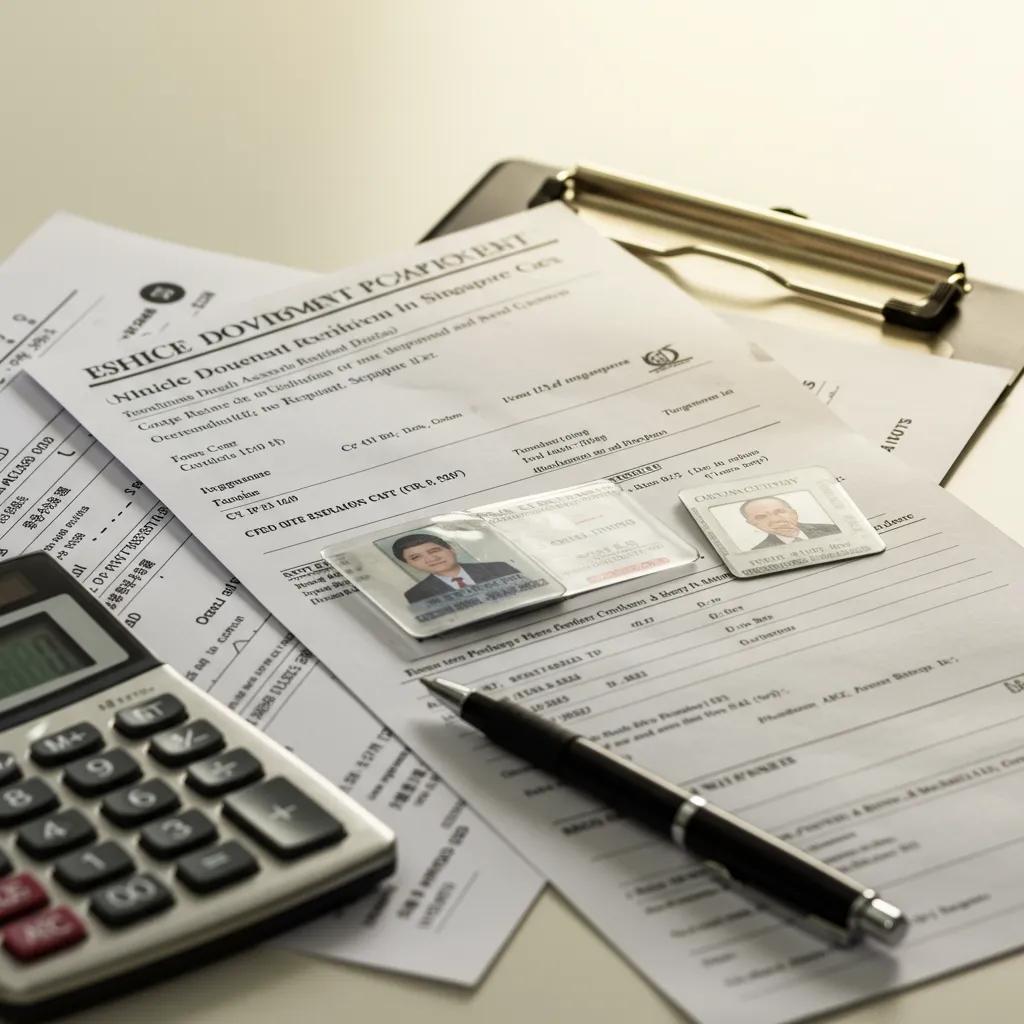
To legally scrap a car in Singapore, you must present key ownership and registration documents that facilitate official deregistration and transfer, ensuring the LTA‘s records are updated accurately. Typically required documents include the original vehicle registration certificate, a valid owner ID (NRIC or passport), and any necessary loan clearance or lien release paperwork. While service records and maintenance receipts are optional, they can enhance transparency and potentially improve your valuation. It’s also beneficial to have vehicle photos, the chassis/VIN number, and details about your COE/PARF status readily available to expedite remote valuations and minimise the need for repeated inspections. Organising these documents beforehand significantly speeds up the process and simplifies the handover to the scrapyard or dismantler.
If you find yourself unable to produce every required document immediately, there are pathways to obtain certified copies or liaise with financial institutions. The next section will explain how your car’s COE and PARF status specifically influence its scrap value.
How Does COE and PARF Affect Your Scrap Car Value?
The Certificate of Entitlement (COE) and Preferential Additional Registration Fee (PARF) rebates are financial components that significantly impact the payout you receive when scrapping your car. Any remaining COE validity or PARF credits represent recoverable value or potential obligations during the deregistration process. If your vehicle still has valid COE or PARF rebates, these can either increase your net proceeds or require settlement before the transfer, depending on LTA regulations and your financing status. Practically, an expired COE usually lowers a car’s resale value but might not drastically affect its scrap value. Conversely, remaining PARF rebates can be partially recoverable and are often a key part of the valuation discussion between you and the buyer. Understanding how COE and PARF are factored into the sale will help you set realistic expectations and provide clear points to verify during the valuation stage.
Clarifying the impact of COE and PARF naturally leads to the environmental advantages of responsible scrapping. The next section will outline these benefits and explain why compliant de-pollution is so important.
What Are the Environmental Benefits of Scrapping Your Car Responsibly?
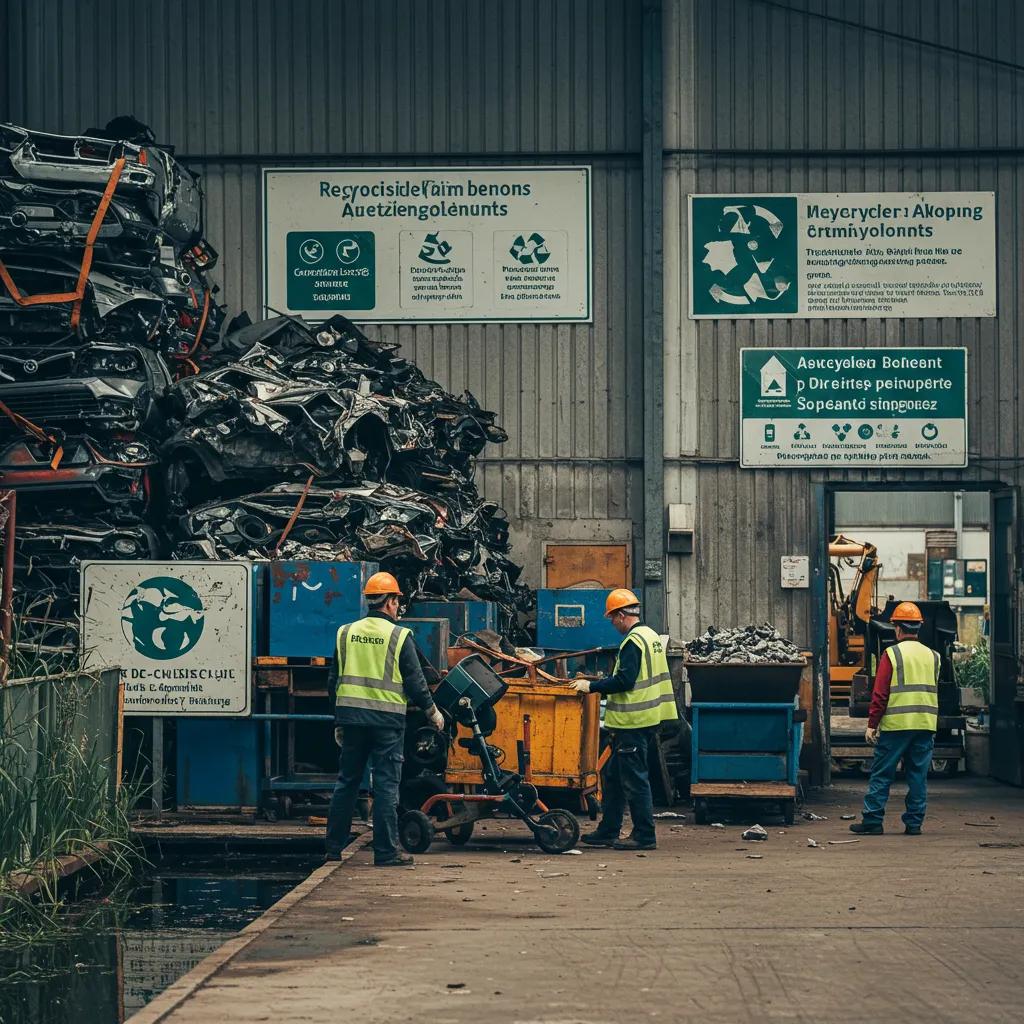
Responsible car scrapping prevents hazardous substances like engine oil, coolant, battery acid, and refrigerants from contaminating our soil and waterways. It also facilitates the recovery of valuable metals, plastics, and rubber for reuse in new products. This process involves meticulous material segregation and controlled treatment: fluids are safely drained and processed, batteries are sent to specialised recycling facilities, and both ferrous and non-ferrous metals are separated for smelting and repurposing. The direct benefits include reduced landfill burden, lower greenhouse gas emissions through material recovery, and fewer toxic leaks into our ecosystems, all of which actively support circular economy principles. By choosing compliant dismantlers, you ensure environmental safeguards are upheld and often enhance the marketability of salvaged parts for international buyers who require proper documentation.
Understanding these environmental considerations naturally leads to how a professional service provider can simplify the transactional and regulatory complexities for sellers.
How Does Everise Auto Simplify the Car Scrapping Process?
Everise Auto, operating as Singapura Cars & Parts PTE LTD, offers a comprehensive Scrap Car Service designed to guide sellers through every step, from valuation and collection to deregistration assistance and organised dismantling, ensuring full legal and environmental compliance. Their streamlined workflow typically includes preliminary quotes based on photos, on-site inspections when necessary, and expert handling of all deregistration paperwork and LTA interactions, significantly reducing the administrative burden on owners. The primary benefit for sellers is a single-point service that efficiently converts an end-of-life vehicle into recoverable value, while expertly managing COE/PARF checks and coordinating with certified recycling facilities. Engaging a dedicated service provider can expedite the settlement process and guarantee that de-pollution and parts salvaging adhere to established environmental standards and export-ready procedures.
By expertly managing inspections and paperwork, Everise Auto also empowers sellers aiming to maximise their returns. This leads us directly into the next section, which explores where to sell your end-of-life vehicle for the best possible outcomes.
Where Can You Sell Your End-of-Life Vehicle for Maximum Returns?
When selling an end-of-life vehicle, you have several options: direct sale to a scrapyard or dismantler, selling parts individually to workshops or through online marketplaces, participating in auctions, or arranging a trade-in. Each channel offers a different balance of speed, net return, and effort required. The mechanism that determines your returns is a combination of the value of salvageable parts, current scrap metal rates, your vehicle’s COE/PARF status, and the prevailing market demand for specific components. Selling directly to a reputable scrapyard often provides the quickest, most transparent offers, while selling parts individually can yield higher returns if your car has high-demand components. Below are practical valuation factors to help you compare offers and decide which channel best suits your priorities.
- COE and PARF status: Any remaining credits or obligations directly impact your net proceeds.
- Vehicle condition: Intact engines, gearboxes, and bodywork significantly increase the value of salvageable parts.
- Parts demand: Certain makes and models command premium prices for specific components.
- Convenience vs. return: Opting for immediate collection might mean a slightly lower return compared to selling parts individually.
Sellers seeking a clear, comparable valuation can use structured tables to estimate potential returns. The table below illustrates how vehicle condition and COE/PARF status typically influence expected value ranges.
| Vehicle Condition / COE-PARF Status | Typical Attribute | Estimated Value / Notes |
|---|---|---|
| Good condition, valid COE | High parts salvage potential + remaining COE value | Expect higher offers; thorough inspection of engine and transmission is key. |
| Fair condition, expired COE | Moderate parts salvage potential | Value primarily driven by components currently in high demand. |
| Heavily damaged, no PARF | Low parts salvage, high scrap metal value | Value is mainly from immediate recycling potential; minimal part resale value. |
| Complete vehicle, clean title | Streamlined deregistration process | Ideal for direct scrapyard purchases with a quick payout. |
This table provides a clear overview of how a vehicle’s condition and registration status typically shape offers, helping you prioritise documentation and any minor repairs that could unlock higher prices.
What Is the Valuation Process for Scrap Cars at Everise Auto?
Everise Auto assesses scrap vehicle value through a multi-faceted approach that includes remote photo evaluation, detailed on-site inspections, and component-level appraisals. This process carefully considers parts salvageability, metal weight, and the crucial COE/PARF status. The typical workflow begins with submitted photos and the vehicle’s VIN/chassis identification. This is followed by an inspection that meticulously records all reusable components and estimates the labour required for their removal. Market demand for specific parts and their export potential are then assessed to determine the parts-salvage value. This is combined with current scrap metal rates to present a consolidated, transparent offer. Providing an itemised breakdown of the offer helps sellers understand exactly how each element contributed to the final price.
A clear and transparent valuation process minimises disputes and speeds up the decision-making process, whether you choose to accept the offer or pursue parts-only sales. The next subsection details how Everise Auto expertly handles all the necessary paperwork.
How Does Everise Auto Handle Deregistration and Paperwork?
Everise Auto expertly assists sellers by preparing and submitting all necessary deregistration documentation to the relevant authorities, meticulously coordinating the ownership transfer required for lawful scrapping. Their efficient workflow typically involves collecting original registration documents, owner identification, and any required loan clearance documentation, before submitting the deregistration forms on your behalf. While estimated processing times can vary depending on case complexity, their structured handover and documentation process significantly reduce delays and administrative friction. To expedite this stage, sellers should ensure they have certified documents and vehicle records readily available; having these prepared is often the key difference between same-week completion and a multi-week process.
Professional handling of paperwork not only reduces the risk of compliance issues but also enables the prompt commencement of dismantling. This leads us to the next subsection, which outlines the types of vehicles Everise Auto accepts.
What Types of Vehicles Does Everise Auto Accept for Scrapping?
Everise Auto welcomes a wide array of vehicle classes, including standard passenger cars, vans, and light commercial vehicles. They also evaluate imported or heavily modified vehicles on a case-by-case basis, offering specialised handling where needed. Their acceptance criteria focus on whether components can be safely dismantled, if hazardous systems require special de-pollution procedures, and if salvaged items are suitable for export markets. Exclusions or additional requirements typically apply to vehicles with title issues, significant customisation, or special import paperwork. Sellers with non-standard vehicles should disclose any modifications and origin details early in the process to avoid delays and ensure accurate quotes.
Knowing the types of vehicles accepted helps sellers decide whether to pursue a direct scrap sale or explore parts-only options. The next subsection explains how to efficiently request a free, no-obligation quote.
How to Get a Free Quote for Your Scrap Car?
Requesting a free quote is a straightforward process that begins with providing clear photos, the chassis/VIN number, your COE/PARF status, and a concise description of the vehicle’s condition to enable a remote estimate. An in-person inspection will then finalise the offer. For the best remote assessment, ensure your photos capture clear angles of the front, rear, engine bay, and interior, along with close-ups of any major damage and the dashboard showing the odometer. Including these details significantly accelerates an accurate appraisal. Sellers should anticipate a checklist from the provider requesting registration details and any outstanding finance information to confirm clear title. Fast-response services typically provide initial estimates within 24–48 hours, with firm offers following the inspection.
Preparing this checklist and clear photos minimises back-and-forth communication, speeding up acceptance and collection. This efficiency is crucial as we move into the buying-side guidance covered in the next section.
How to Buy Quality Used Car Parts from a Trusted Scrapyard in Singapore?
Effectively buying used car parts requires a careful assessment of their condition, compatibility, and the seller’s return policies to ensure a responsible repair or resale. A reputable scrapyard will provide detailed documentation on part attributes and any testing outcomes. The mechanism for trustworthy purchasing combines clear part descriptions, accessible inspection records, verified compatibility checks against your specific make and model, and, where applicable, functional testing results. Buyers prioritising roadworthy components should always request inspection photos, testing reports, and documented mileage or usage history. The following guidance is designed to help workshops and DIY buyers navigate quality, pricing, and selection to minimise installation risks and achieve optimal repair outcomes.
Below, you’ll find an example parts comparison table to help buyers evaluate typical part categories, condition descriptors, compatibility, and price ranges.
| Part (name/spec) | Condition / Roadworthiness | Compatibility (makes/models) | Typical Price Range |
|---|---|---|---|
| Used Engine (shortblock) | Good condition, no leaks; compression tested | Common models (e.g., Toyota, Honda) | Mid-range compared to a new replacement part. |
| Used Gearbox | Functional test passed; minor wear evident | Requires specific model fitment | Varies significantly by transmission type. |
| Lighting Assembly | Minor cosmetic wear, full functionality confirmed | Broad compatibility with specific model years | Low to mid-range pricing. |
| Battery (used) | Tested charge and health status | Model-specific mounting and specifications required | Low; generally recommended for replacement if charge is weak. |
This table offers a practical snapshot to help you prioritise inspections and shortlist parts that precisely match your workshop’s needs, thereby reducing time-to-repair and minimising the risk of component mismatch.
What Types of Used Auto Parts Are Available at Everise Auto?
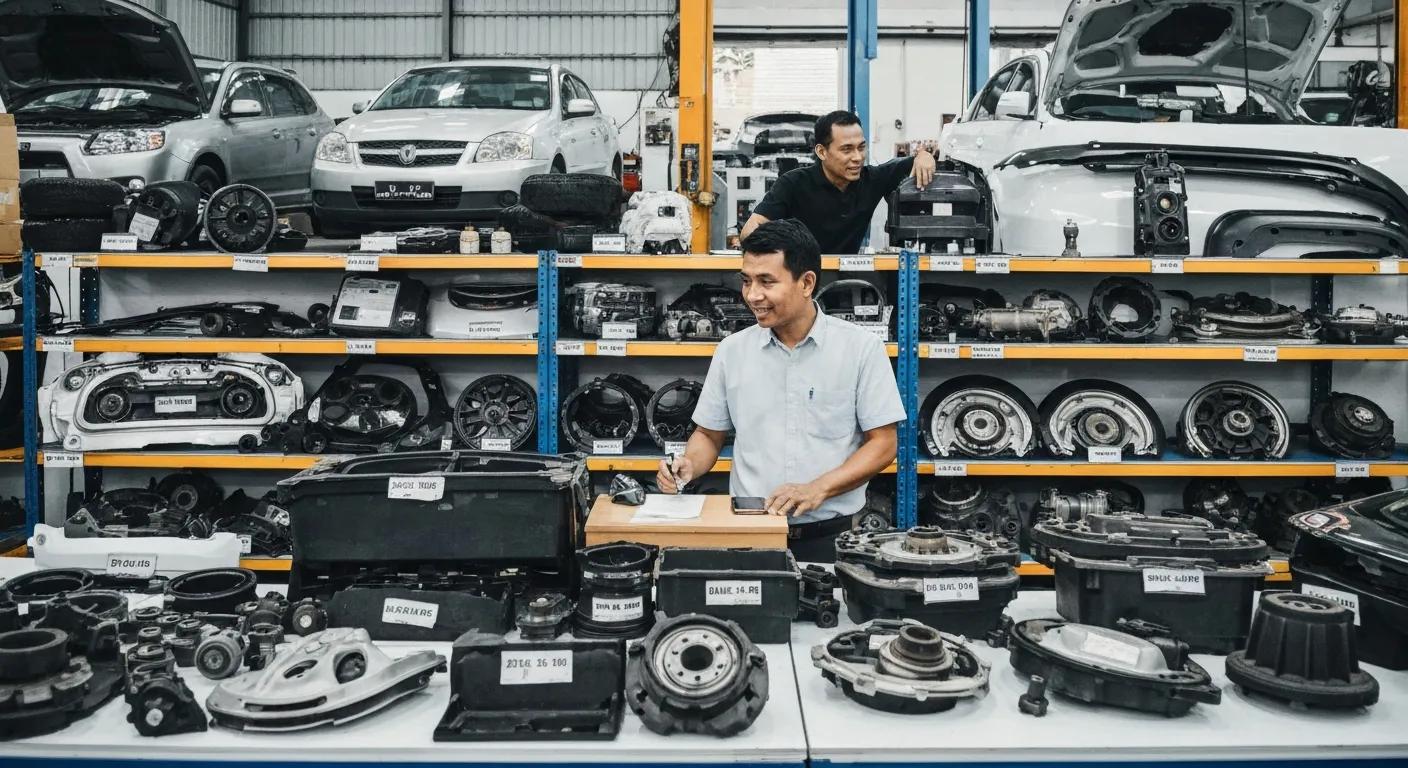
Everise Auto offers a wide selection of salvageable components, including used engines, gearboxes, lighting assemblies, wiring harnesses, suspension parts, rims, tyres, and batteries, subject to availability for specific makes and models. The inventory is dynamically driven by incoming end-of-life vehicles and the demand from both local repair markets and international export. Consequently, high-turnover items like engines and transmissions are consistently stocked. Buyers are encouraged to request condition reports and photos to verify that parts meet roadworthiness criteria before purchase. The broad availability of component categories helps mechanics source parts more quickly than ordering new ones, and the next subsection explains how thorough inspection safeguards buyers.
What Is the Vehicle Dismantling and Recycling Process at a Scrapyard?
Vehicle dismantling and recycling at a scrapyard follows a structured sequence of stages: initial assessment, de-pollution, component extraction, and material recovery. This methodical approach maximises salvageable value while strictly adhering to environmental regulations. The process begins with an assessment to prioritise reusable components and identify any hazardous elements. This is followed by the controlled removal of all fluids and batteries, and the systematic extraction of parts designated for resale or refurbishment. Recovered metals and plastics are then segregated and processed for industrial recycling, significantly reducing landfill waste and lowering the embodied carbon footprint of replacement parts. Transparent documentation at each stage supports traceability for buyers and regulators, enhancing confidence in exported goods.
The initial operational stage is detailed below, focusing on the safe removal and meticulous cataloguing of components.
How Are End-of-Life Vehicles Dismantled for Reusable Parts?
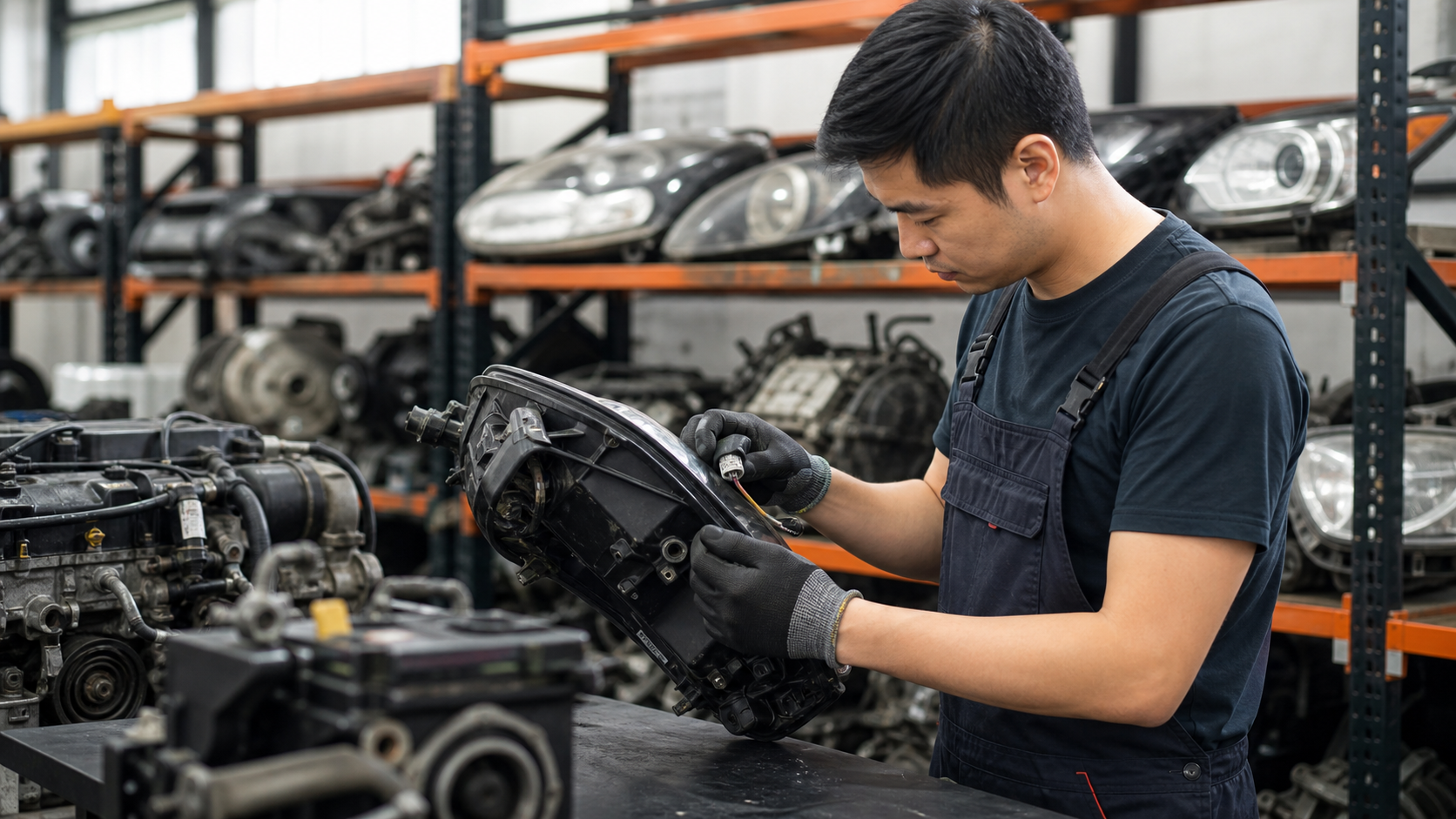
The dismantling process commences with the safe evacuation of all vehicle fluids—engine oil, coolant, brake fluid, and fuel. This is followed by the careful disassembly of major vehicle subsystems, including the drivetrain, electrical modules, and body components. Each extracted part is meticulously tagged with provenance information (VIN, mileage, condition) and catalogued into inventory to facilitate subsequent sales and export documentation. Quality-control checkpoints rigorously assess the roadworthiness and functionality of each part before it is listed for sale. Smaller components are cleaned and packaged to prevent corrosion during storage and transit. This systematic extraction process ensures the maximum yield of high-value components and minimises the volume of material sent for recycling.
Properly cataloguing parts prepares them effectively for the crucial de-pollution and recycling stages, which are described in the following section.
What Happens During the De-pollution and Environmental Recycling Stage?
De-pollution involves the safe neutralisation and disposal of hazardous materials, such as battery acids, refrigerants, and various fluids. This is achieved using specialised containment and treatment systems designed to prevent any contamination of soil and water. Batteries are carefully sorted by chemistry (lead-acid or lithium) and directed to appropriate specialised recycling streams, while refrigerants undergo controlled recovery processes to prevent the release of harmful greenhouse gases. Metals are meticulously segregated into ferrous and non-ferrous categories and sent for smelting or reuse. Plastics are separated and graded for mechanical recycling or energy recovery where feasible. These stringent measures ensure full compliance with environmental standards and help recyclers meet the rigorous requirements of international buyers for exported materials.
Circular Economy and End-of-Life Vehicle (ELV) Material Recovery
The circular economy framework adopts a distinct approach to product design, utilization, and disposal by establishing a closed-loop system that maximizes resource efficiency. This thesis investigates End-of-Life Vehicles (ELVs) and their significance within the circular economy framework, particularly as the automotive sector faces mounting pressure to mitigate its environmental impact and enhance resource productivity. Given the presence of valuable metals, polymers, and other materials, which are increasingly recognized as critical resources in the context of urban mining, vehicles reaching their End-of-Life (EoL) stage offer substantial potential for material and component recovery.
Circular Economy in the Automotive Industry: a Study on End-of-Life Vehicles Management and Circular Economy Strategies, 2025
Once parts have been successfully salvaged and de-polluted, the next critical steps involve meticulous packaging and preparation for export to ensure they arrive safely at their destination.
How Are Salvaged Parts Packaged and Prepared for Export?
Best practices for packaging salvaged parts include thorough cleaning and drying, applying corrosion inhibitors to metal components, using protective crating or palletisation for heavier items, and clearly labelling each package with part IDs, condition notes, and destination details. Essential documentation, such as packing lists and condition reports, is included to satisfy customs and buyer requirements. Heavier components are securely fastened within crates or containers to prevent any shifting during shipment. High-quality photos and a detailed manifest support remote buyer inspection and help minimise disputes upon arrival. Proper packaging significantly extends the market reach of salvaged parts and drastically reduces damage rates during international transit.
Accurate packaging and comprehensive paperwork are absolutely essential for export readiness, a topic that will be explored in more detail in the next section concerning cross-border operations.
How Does International Export of Scrap Cars and Used Parts Work?
The international export of scrap cars and used parts involves a complex interplay of regulatory compliance, robust packaging, reliable freight forwarding, and meticulous buyer documentation to successfully move goods from Singapore to global markets. This process requires that both vehicles and parts meet the specific import regulations of the destination country. Exporters must obtain all relevant permits and customs documents, and logistics providers manage containerisation and cargo tracking. Export readiness significantly boosts buyer confidence, enables higher prices for quality parts, and opens up markets in regions with substantial demand, such as the Middle East, Africa, and parts of Asia and Europe. Below are practical export steps and the documentation commonly required for successful international shipments.
What Are the Export Documentation and Permit Requirements?
Essential export documents typically include a commercial invoice, bill of lading, packing list, and any vehicle-specific certificates mandated by the destination country, such as de-pollution certificates or origin declarations. Permits for exporting vehicles or hazardous components may be necessary depending on the material classification, and customs declarations must accurately reflect the content, value, and relevant HS codes. Exporters should proactively obtain destination-specific import guidance to prevent rejection or quarantine upon arrival. Maintaining traceable records of de-pollution and part testing is also crucial to meet buyer expectations. Proper documentation significantly reduces clearance delays and supports higher valuations for compliant shipments.
Clear documentation practices also facilitate reliable logistics workflows, which are described next in relation to how companies manage shipping operations.
How Does Everise Auto Manage Global Shipping and Packaging?
Everise Auto expertly organises exports through a network of trusted partner freight forwarders and specialised container packing services. This includes managing crate construction, optimising load capacity, and coordinating bookings to destination ports. Their comprehensive process typically involves preparing detailed packing lists, securely fastening parts in export-grade crates or pallets, arranging inland collection, and providing buyers with regular tracking updates. This streamlined logistics workflow minimises the risk of in-transit damage and provides buyers with accurate expected lead times and shipment milestones. Partnering with experienced forwarders ensures competitive freight rates and professional handling for a diverse range of export markets.
A dependable shipping workflow is vital for meeting buyer expectations across diverse global regions. The following subsection outlines typical international buyer profiles and the key demand drivers.
Who Are the International Buyers and Markets for Used Car Parts?
International buyers primarily consist of independent repair workshops, established parts dealers, and regional exporters who resell bulk consignments. Market demand varies significantly by region, with particularly strong interest in engines, transmissions, and electrical modules. The buyer mechanism is heavily influenced by local repair capacity and import regulations: some regions prioritise low-cost parts for commercial vehicle fleets, while others actively seek high-quality OEM components for luxury or performance vehicles. Understanding regional demand patterns allows exporters to effectively package and price consignments. For instance, prioritising engines and transmissions for markets with a high concentration of workshops can significantly increase sell-through rates and reduce inventory holding times.
Identifying buyer types and understanding demand patterns helps exporters segment their inventory for maximum return. This leads us to the compelling value proposition presented in the next section.
Why Choose Everise Auto as Your Preferred Scrapyard for Cars in Singapore?
Everise Auto distinguishes itself as a comprehensive, full-service operator for scrap car processing, parts sales, and international export. They seamlessly integrate valuation, deregistration assistance, dismantling, de-pollution, and logistics into a single, efficient workflow. The company’s core value proposition centres on providing a hassle-free process that expertly handles all necessary paperwork and ensures export readiness, making it significantly easier for sellers to convert end-of-life vehicles into cash and for buyers to obtain documented, thoroughly inspected parts. Their operations cater to both local sales and extensive international shipments to markets across the Middle East, Africa, Asia, Europe, and the Caribbean, effectively supporting diverse buyer demands. Choosing a single, integrated provider for end-to-end handling minimises coordination efforts and ensures seamless continuity from initial valuation to final recycling or export.
The following paragraphs will summarise Everise Auto’s specific capabilities and how they translate into tangible customer benefits across experience, transparency, and service delivery.
What Experience and Expertise Does Everise Auto Bring to Car Scrapping?
Everise Auto, operating under the name Singapura Cars & Parts PTE LTD, showcases extensive capabilities in vehicle inspection, dismantling, parts inventory management, and export logistics. This expertise is built upon years of operational experience, reflected in their established public presence. Their in-house processes encompass safe de-pollution protocols, rigorous component testing, expert crate-ready packaging, and established relationships with international forwarding agents, ensuring compliance with varied destination requirements. This depth of operational knowledge helps guarantee that parts are not only marketable but also fully compliant with environmental and import standards. Sellers benefit immensely from a consolidated workflow that minimises handoffs and provides clearer timelines and documentation for deregistration and shipment.
This operational expertise translates into consistent service levels and significantly reduces the seller’s administrative load, directly linking to the company’s unwavering commitment to customer satisfaction.
How Does Everise Auto Ensure Customer Satisfaction and Integrity?
Everise Auto places a strong emphasis on transparent valuation processes, meticulously documented inspection reports, and a clear, straightforward paperwork handover system to safeguard both sellers and buyers. This approach provides a traceable chain of custody from vehicle intake through to final local sale or export. Key mechanisms include itemised quotes, comprehensive condition reports accompanying all parts, and coordinated deregistration submissions to ensure full regulatory compliance. These robust processes effectively minimise disputes and facilitate smoother payments and ownership transfers. Upholding transparent practices and documented workflows empowers both workshop buyers and vehicle sellers to fully understand how prices were determined and what to expect at the point of collection or delivery.
This documented integrity is fundamental to building trust and is consistently reflected in positive customer feedback themes, which are summarised below.
What Do Customers Say About Everise Auto’s Scrap Car and Parts Services?
Common themes in customer feedback consistently highlight Everise Auto’s exceptional responsiveness, the clarity of their valuations, and their practical assistance with paperwork and collection logistics. These positive experiences reflect a service model meticulously designed for end-to-end convenience. Reported experiences frequently commend the speed of initial quotes, the structured nature of inspection reports, and invaluable assistance with deregistration and export documentation, all of which significantly reduce seller effort. Summarised testimonials consistently point to the company’s reliability and professional approach to handling both end-of-life vehicles and individual parts, reinforcing Everise Auto’s positioning as a premier one-stop provider for both local and international needs. For prospective customers, these documented reviews and transparent processes offer crucial reassurance when deciding where to sell their vehicle or source necessary parts.
Trustworthy service models are proven to increase conversion rates for both sellers and buyers. The final section addresses frequently asked operational questions.
Frequently Asked Questions
What Should I Consider Before Scrapping My Car?
Before you decide to scrap your car, take a moment to assess its overall condition, paying close attention to both mechanical and bodywork aspects. Consider the potential value of any salvageable parts, as well as your vehicle’s COE and PARF status, which can significantly influence your final returns. Furthermore, reflect on the environmental implications of scrapping and ensure you select a compliant scrapyard that adheres to proper de-pollution practices. Understanding these key factors will empower you to make an informed decision, maximise your financial outcome, and contribute positively to responsible recycling efforts.
Can I Scrap My Car If It’s Still Under Finance?
Yes, it is possible to scrap a car that is still under finance, but it is imperative that you first settle any outstanding loans or obtain official clearance from your financing institution. This process typically involves contacting your lender directly to understand the specific steps required for deregistration and ownership transfer. While some scrapyards may offer conditional acceptance, it is crucial to ensure that all financial obligations are fully resolved to prevent any legal complications during the scrapping process.
How Can I Ensure I Get the Best Price for My Scrap Car?
To secure the best possible price for your scrap car, it’s essential to gather all necessary documentation, including the vehicle registration certificate and details of its COE/PARF status. Present your car in the best possible condition by giving it a thorough clean and providing clear, high-quality photos for remote valuations. Additionally, compare offers from multiple reputable scrapyards to gain a comprehensive understanding of current market rates. Don’t hesitate to highlight any high-demand parts or unique features that might increase your vehicle’s value, and consider timing your sale strategically based on prevailing market demand trends.
What Happens to My Car After It’s Scrapped?
Once your car has been officially scrapped, it undergoes a systematic dismantling process. During this stage, reusable parts are carefully extracted, and any hazardous materials are safely disposed of according to strict environmental regulations. The remaining metal and other materials are then processed for recycling, contributing significantly to environmental sustainability. The scrapyard ensures that all components are handled in compliance with regulatory standards, minimising pollution and maximising resource recovery. This entire process actively supports the circular economy by transforming end-of-life vehicles into valuable resources for new products.
Are There Any Fees Associated with Scrapping My Car?
While many scrapyards provide complimentary collection and scrapping services, some may impose fees for specific services, such as towing or administrative processing. It is vital to clarify any potential costs upfront when you initially contact scrapyards. Furthermore, if your vehicle requires extensive de-pollution procedures or has special handling needs, associated fees may apply. Always request a detailed breakdown of any anticipated charges to avoid unexpected costs during the scrapping process.
What Should I Do If My Car Is Not in Running Condition?
If your car is not in running condition, you can still absolutely scrap it. Most scrapyards readily accept non-operational vehicles; however, the valuation may differ based on the extent of the damage and the availability of salvageable parts. Be prepared to provide detailed information about the vehicle’s condition and any missing components. Many scrapyards offer complimentary towing services for non-running cars, making the scrapping process significantly easier and more convenient for you without incurring additional hassle.
How Long Does the Car Scrapping Process Take?
Typical timelines for the car scrapping process range from same-day preliminary quotes to one to two weeks for full deregistration and dismantling. This duration largely depends on the completeness of your documentation and the scheduling of logistics. Photo-based preliminary valuations can usually be provided within 24–48 hours, while on-site inspections and final offers may require scheduling within several business days. Deregistration timelines are influenced by submission processing times at the LTA, which can extend the overall duration. De-pollution and dismantling schedules follow based on the yard’s current workload and parts recovery priorities. Providing complete documentation and ensuring clear vehicle access at all stages significantly speeds up the process and often leads to same-week completion for standard cases.
Understanding these expected timelines is crucial for sellers to plan transport and settlement arrangements effectively, especially when documents might be incomplete.
Can I Sell My Scrap Car Without Complete Documents?
Selling your scrap car without complete documents is sometimes possible, but it typically requires remediation steps such as obtaining certified copies or settling outstanding finance. Legal clearance is absolutely necessary for lawful deregistration. Some providers may offer conditional acceptance, contingent upon the regularisation of missing documents and identity verification before final payment and ownership transfer. The safest approach is to disclose any missing items upfront and seek assistance to obtain the necessary records from financial institutions or the relevant registration authority. Everise Auto offers dedicated support pathways to help regularise documentation and complete the deregistration process, thereby reducing uncertainty for sellers.
These available assistance options effectively reduce barriers to sale and naturally lead into the discussion of warranty expectations for used parts purchased from scrapyards.
Are Used Car Parts Covered by Any Warranty or Guarantee?
Typical warranty terms for used car parts vary significantly by component and seller, but often include short return windows or limited functional guarantees for major components like engines and gearboxes. Buyers should always request explicit warranty terms in writing, familiarise themselves with the return/exchange process, and verify whether any testing was conducted prior to sale. Reconditioned or thoroughly tested items generally carry more robust guarantees compared to raw salvaged parts. Everise Auto meticulously documents inspection results and provides detailed condition reports to clearly outline expectations and support limited post-sale recourse.
Clear warranty terms are essential for minimising installation risk and informing pricing decisions, which directly connects to how scrap car pricing is determined.
How Is Scrap Car Pricing Determined in Singapore?
Scrap car pricing in Singapore is determined by a combination of factors: the value of salvageable parts, current metal scrap rates, the vehicle’s COE/PARF status, its overall condition, and the market demand for specific components. Each of these elements plays a crucial role in shaping the final offer. The salvageable value of the engine and transmission can often dominate offers for intact vehicles, while heavily damaged cars may be valued primarily based on their scrap metal weight. Market demand, both locally and internationally, influences prices for specific parts and brands. Transparent, itemised quotes clearly illustrate how each element contributes to the total valuation. Sellers are advised to compare multiple offers and carefully review the breakdown to ensure they are receiving fair pricing based on the current market context.
Understanding these key price drivers empowers sellers to prioritise actions that can increase their net return, such as preserving high-value components or supplying comprehensive documentation.
Leveraging a car scrapyard in Singapore offers substantial advantages, including promoting responsible recycling, generating financial returns, and contributing to environmental protection. By thoroughly understanding the scrapping process, the necessary documentation, and the key valuation factors, sellers can optimise their outcomes while actively supporting a sustainable future. For individuals and businesses looking to sell their vehicle or purchase high-quality used parts, partnering with a trusted provider like Everise Auto significantly simplifies the entire experience and ensures full compliance. Explore our comprehensive services today and discover how we can help you transform your end-of-life vehicle into valuable resources.