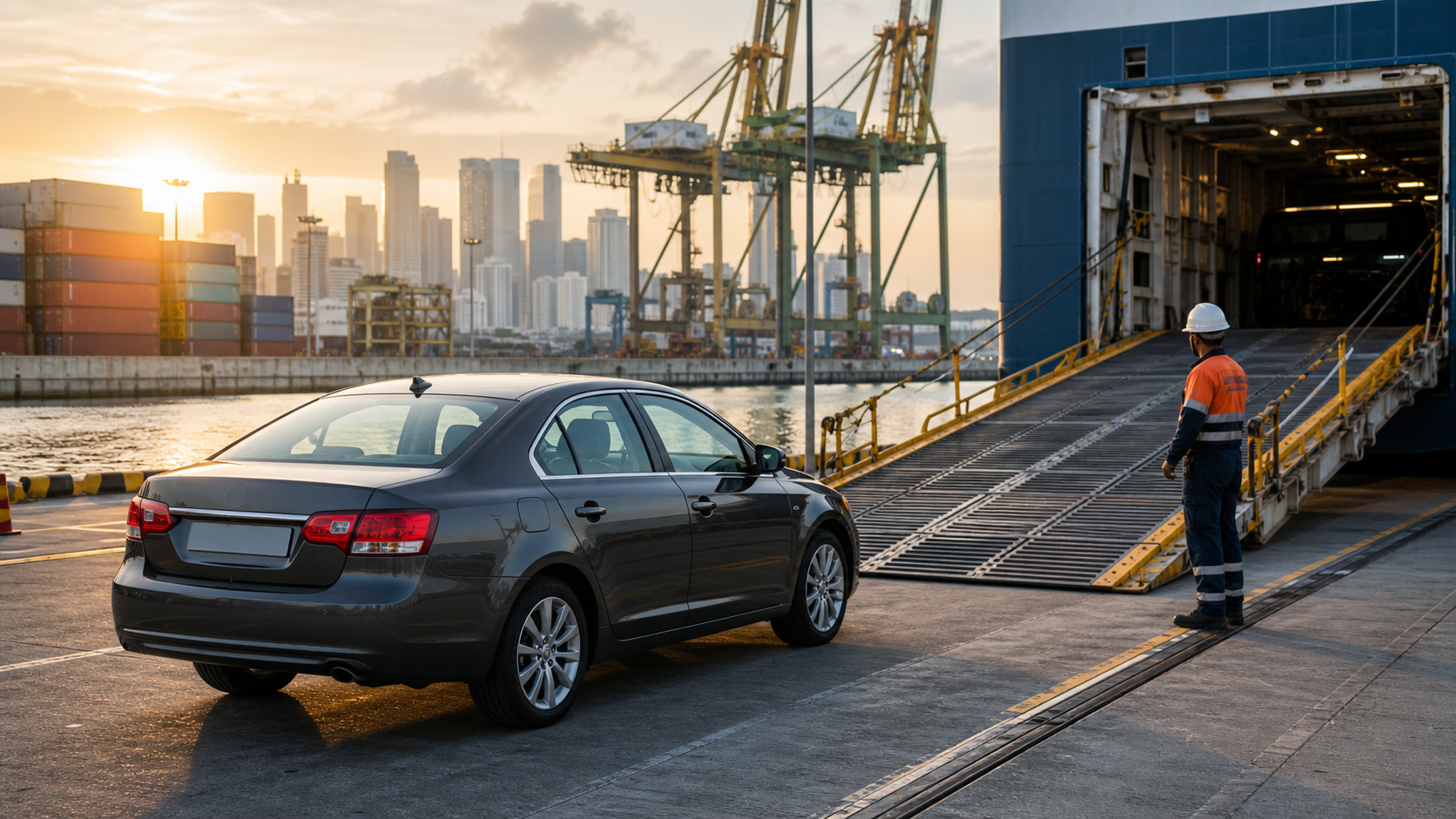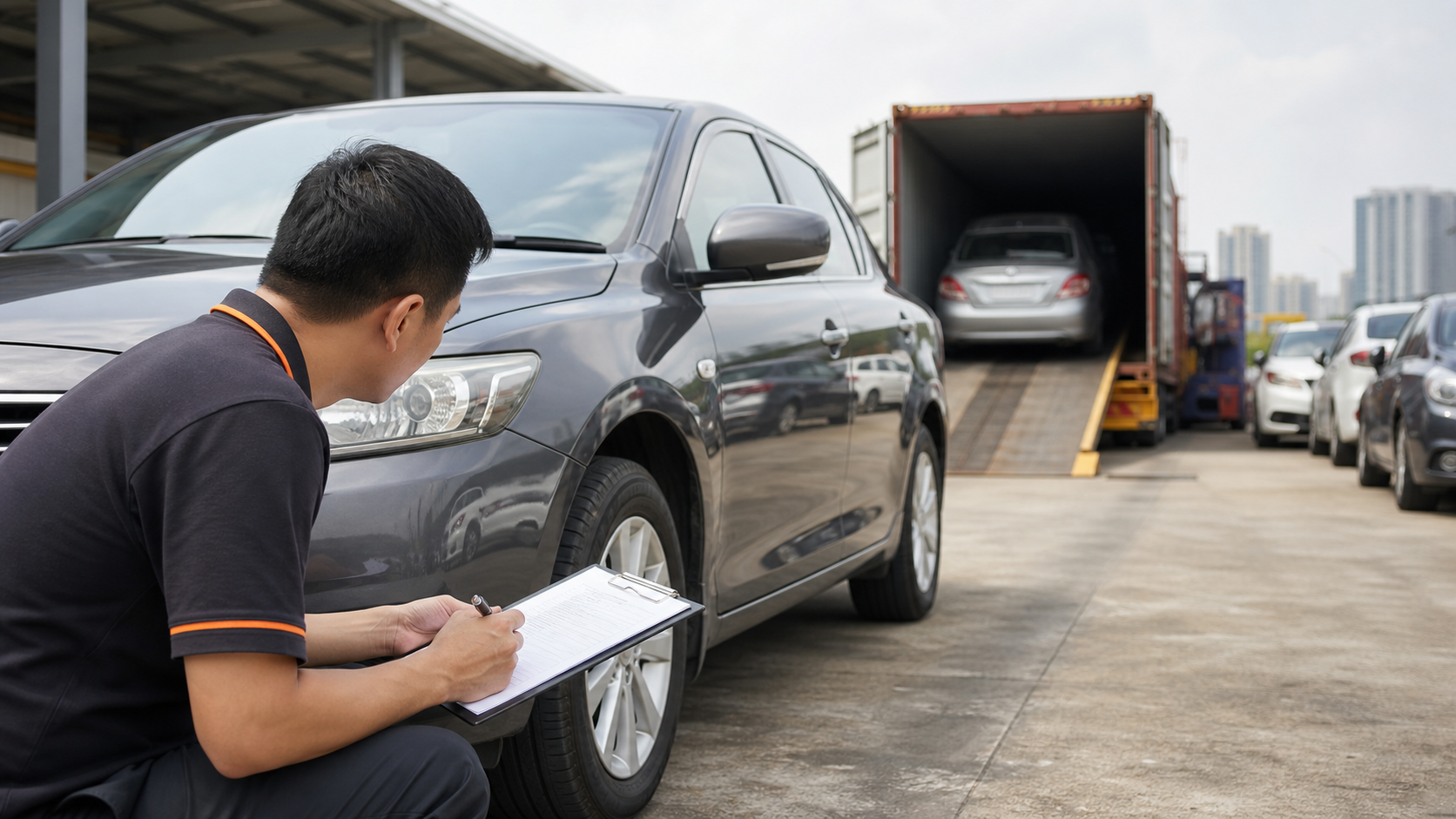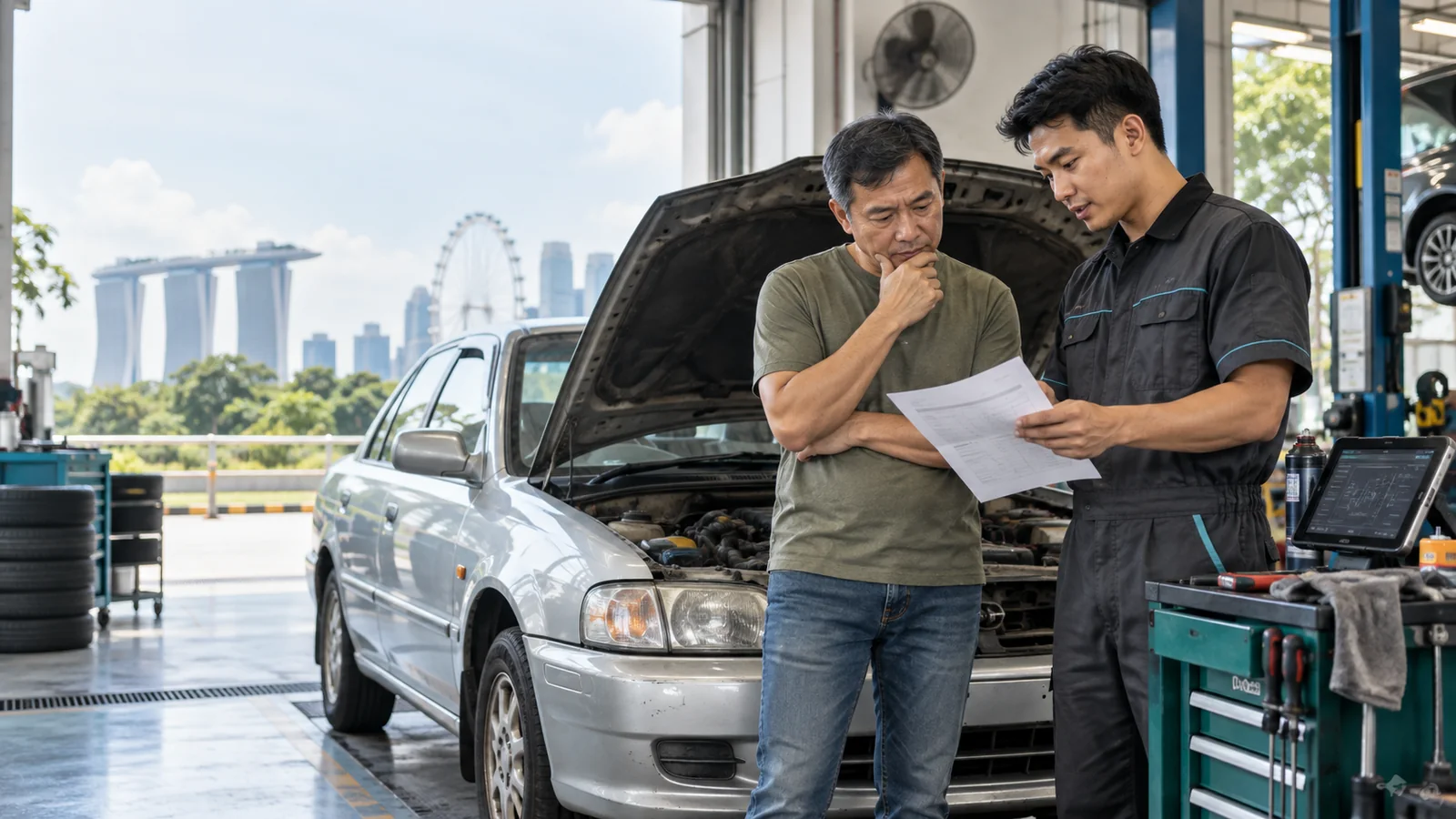
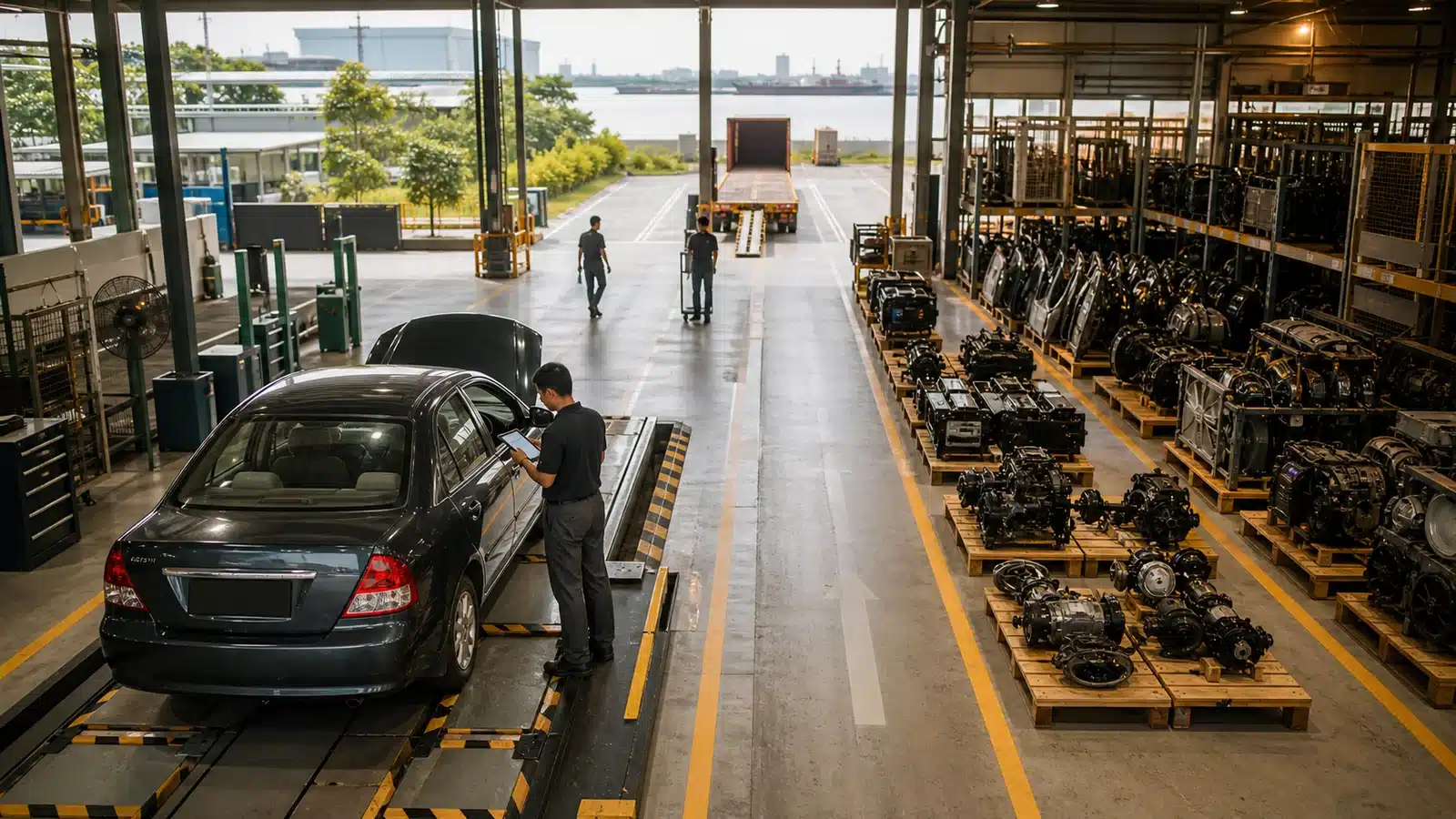
When someone searches for export car from Singapore, the picture that usually comes to mind is a complete vehicle being loaded for an overseas buyer. That does happen. But at an assessment yard, the outcome is often less predictable: a car may leave as a whole unit, or its engine, gearbox, lights, panels and interior parts may begin useful second lives on several other vehicles.
That less visible side of the trade is easy for owners to overlook. A vehicle may attract little interest as a complete unit yet still contain components that a workshop can put back to work, either in Singapore or overseas.
Everise Auto works with complete vehicles and used car parts in Singapore. That makes it possible to assess a vehicle by what can genuinely be reused, rather than judging it only by its age or whether it can still be driven.
What Happens After a Car Is Sold for Export?
The next step depends on the vehicle's condition, model and current market demand. In most cases, the car follows one of two routes:
- The complete vehicle is prepared and shipped to an overseas buyer.
- The vehicle is dismantled, and selected parts are prepared for local sale or overseas export.
A roadworthy car with a sound engine, a complete body and demand in another market may be exported as a whole vehicle. A car with accident damage, serious mechanical faults or weak demand as a complete unit may be more useful as a donor vehicle for parts.
The answer is not always obvious from the outside. A car can look badly damaged and still have an excellent engine and gearbox. Another may appear clean and presentable but have internal problems that make a full export uneconomical.
A useful way to think about export value: the car does not have to remain a car to remain useful.
When the Complete Vehicle Is Exported
Complete-vehicle export is usually considered when the car can still be repaired, registered or operated economically in the destination market.
An exporter will normally look at details such as:
- The make and exact model
- Manufacturing and registration year
- Engine capacity and transmission type
- Mileage and general mechanical condition
- Body condition and accident history
- Availability of replacement parts overseas
- Demand for the model in the destination market
A vehicle that is difficult to sell in Singapore may still be common elsewhere. Workshops in that market may already know the model well, and the parts needed to maintain it may be readily available. That can make repair and continued use more practical than it would be locally.
The selling price seen in an overseas market is not the amount offered to the owner in Singapore. Collection, storage, port handling, shipping, documentation and preparation all have to be covered before the exporter can work out a realistic purchase price.
When a Car Is Exported as Parts
Not every vehicle needs to leave Singapore in one piece. In some cases, dismantling the car and recovering the components that remain in good condition is the more useful route.
Imagine a sedan that has been hit hard at the rear. Repairing the boot floor and rear body may no longer make financial sense, but the car could still have a good engine, gearbox, front doors, headlights, dashboard and air-conditioning system. Those parts do not need to be discarded simply because the complete vehicle is no longer economical to repair.
Components commonly considered for recovery include:
- Engine and gearbox
- Front and rear doors
- Headlights, rear lights and side mirrors
- Dashboard, seats and interior trim
- Steering and suspension components
- Electronic control modules
- Air-conditioning components
- Rims and selected body panels
Parts export can also make sense when a complete vehicle does not meet the import rules of a destination country, but workshops there still need original replacement parts from that model.
Why Singapore Car Parts Can Still Be Valuable Overseas
Vehicles are kept on the road for different lengths of time in different countries. A model that is nearing the end of its practical life in Singapore may remain common elsewhere for many more years. Owners and workshops in those markets still need engines, gearboxes, body panels and electrical components to keep those cars running.
A used original component can be especially useful when:
- The manufacturer no longer produces the new part
- A new original component is too expensive for the repair
- The vehicle is older but still widely used
- A workshop needs an exact original match
- An aftermarket alternative does not fit or perform properly
- A buyer is rebuilding an accident-damaged vehicle
The useful part is not simply the one sitting on a shelf. It has to be identified correctly, removed without damage, checked honestly and matched to the buyer's vehicle. Two components can look identical but differ in their code, connector, mounting points or electronic specification.
From Donor Vehicle to Reusable Part
Before a recovered part is ready for a workshop or an export container, it goes through a practical sequence of checks.
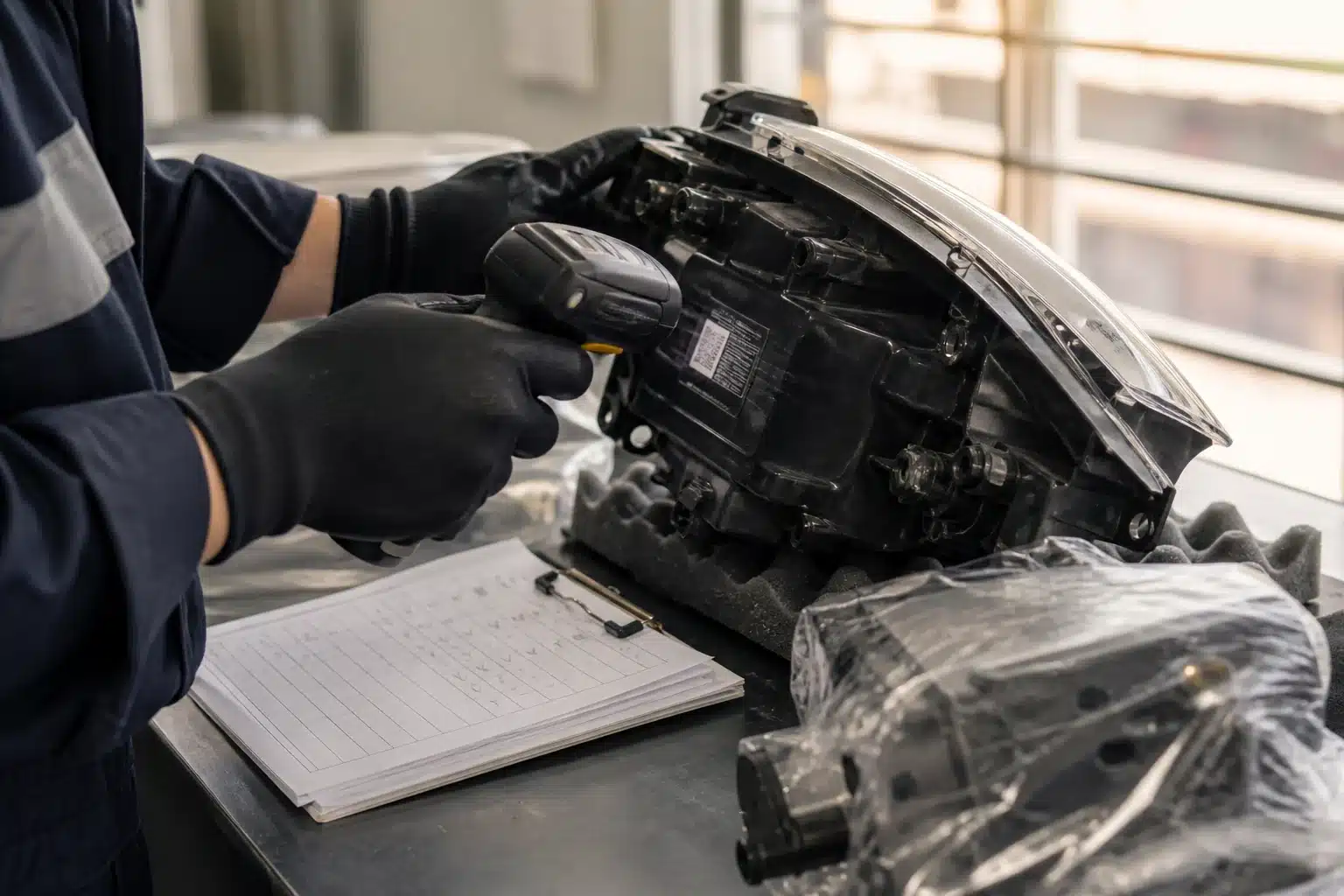
1. Identifying the vehicle
The make, exact model, production year, engine type and transmission are recorded first. Two cars with the same model name can use different components, especially when they were produced in different years or sold with different engine and transmission options.
2. Choosing what can be recovered
The vehicle is examined to see which areas are damaged and which parts may still be useful. A front-damaged car may have good rear body components. A car with engine failure may still have usable doors, lights, seats, wheels and electronic parts. The whole vehicle needs to be considered before dismantling begins.
3. Removing parts without creating new damage
Careful removal matters. Connectors, mounting tabs, housings and brackets can be broken when a component is taken out too quickly. A part that worked perfectly in the donor car may become difficult to install if a plug or mounting point is damaged during dismantling.
This is particularly important for lights, control modules, interior panels and other components with delicate clips or electrical connections.
4. Checking the condition
A clean appearance is not enough. Depending on the part, the assessment may include looking for:
- Cracks or accident impact
- Oil or fluid leakage
- Corrosion or water contamination
- Damaged mounting points
- Broken plugs and connectors
- Signs of overheating
- Unusual wear or previous repair work
Everise Auto handles recovered components such as engines, gearboxes, bumpers and rims. Customers can check current parts availability before visiting.
5. Matching codes and specifications
Visual similarity can be misleading. An engine, gearbox, headlight or electronic module may look correct and still be incompatible with another version of the same vehicle.
Useful matching details can include the engine or gearbox code, manufacturer part number, chassis or model code, connector type, production year, engine capacity and fuel specification. For body parts, even the left-hand or right-hand position matters.
Accurate matching reduces the chance of a workshop receiving a component that cannot be fitted or requires unexpected modification.
6. Preparing the parts for storage and transport
Once selected, each component is protected for the journey ahead. Smaller items can be wrapped and labelled, painted panels need edge and corner guards, and engines or gearboxes must be secured so they cannot shift during handling.
A part may pass through several stages of transport before it reaches the workshop that will install it, so good preparation is not a minor detail.
7. Packing for the destination
An overseas order may contain parts recovered from several vehicles. Heavy items such as engines and gearboxes need stable positioning, while lights, mirrors, trim and electronic components need protection from impact. Space has to be used efficiently without placing delicate items at risk.
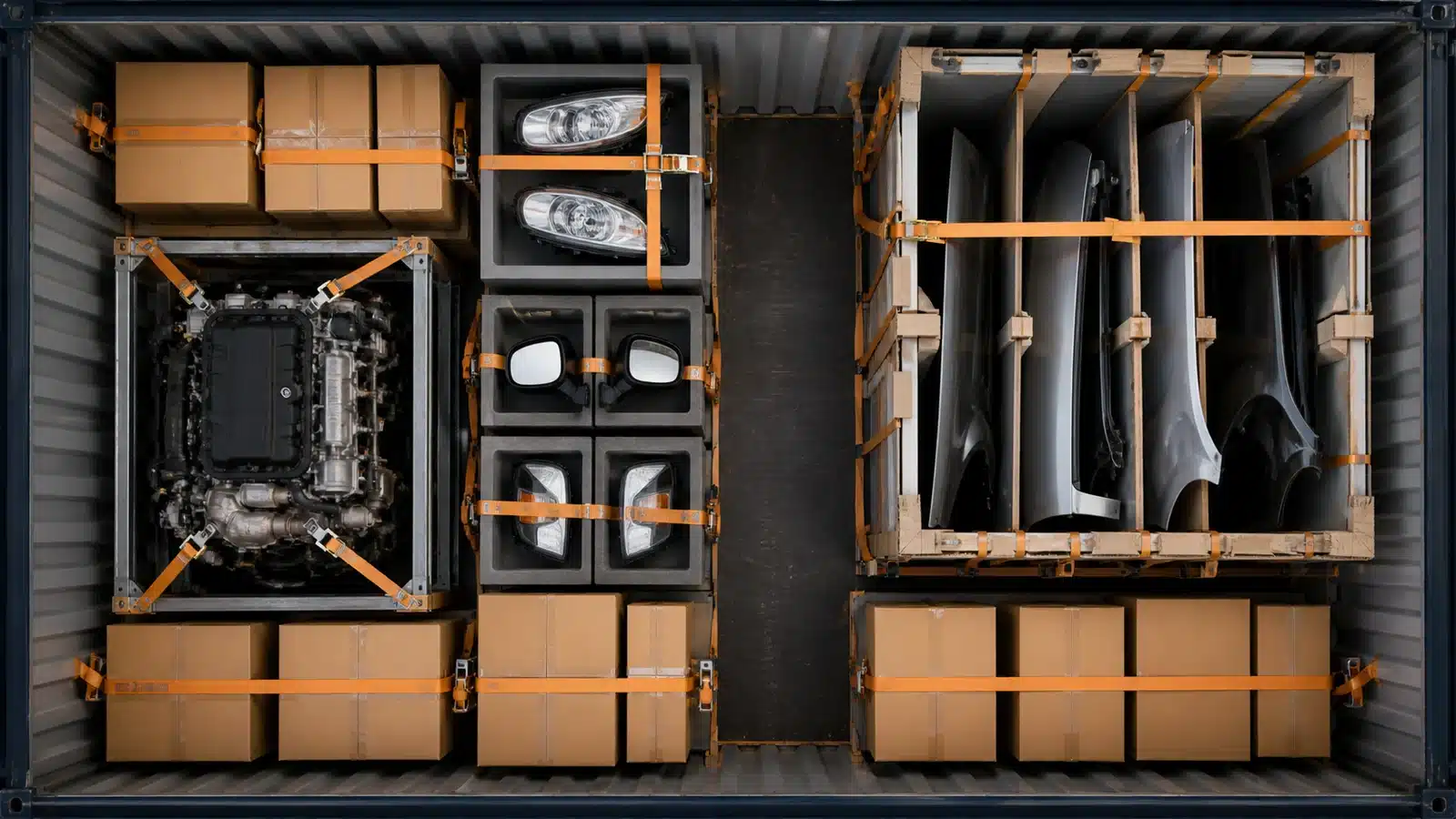
Everise Auto manages dismantling, packing and export work and can prepare complete end-of-life vehicles or selected components for container shipment.
Which Parts Are Commonly Recovered?
The answer depends on the condition of the donor vehicle. Not every part is suitable for reuse, but several categories are regularly assessed.
Mechanical components
- Complete engines and gearboxes
- Alternators and starter motors
- Air-conditioning compressors
- Radiators and cooling components
- Steering racks and differentials
- Driveshafts and selected suspension parts
Mechanical components need accurate identification because similar-looking units can have different capacities, ratios, electronics or mounting arrangements.
Body components
- Doors, bonnets and boot lids
- Bumpers and fenders
- Grilles and side mirrors
- Selected body panels away from the damaged area
Body parts are often specific to a model version or production year. A small design change can be enough to make a panel unsuitable for another vehicle.
Lights and electrical parts
- Headlights and rear lights
- Window switches and instrument clusters
- Control modules and infotainment units
- Sensors and wiring components
Some electrical parts need matching codes, software configuration or programming after installation. Buyers should confirm compatibility before purchasing.
Wheels and interior parts
Rims, seats, centre consoles, door panels, switches and trim pieces may also remain useful. Interior components can be particularly valuable for older models when the original colour or design is no longer available through regular parts suppliers.
What Decides Whether a Car Is Exported Whole or Dismantled?
There is no single rule. The decision is normally based on a mix of practical and commercial factors.
Overall condition
A complete, mechanically sound vehicle is a stronger candidate for full export. Major accident, fire, flood or structural damage may make parts recovery more practical.
Demand for the model
Some models are wanted as complete vehicles. Others have stronger demand as sources of engines, gearboxes or replacement body parts.
Import rules at the destination
Countries have different rules covering vehicle age, emissions, registration and road use. A complete vehicle that cannot be imported into one market may still provide parts that are needed there.
Shipping space and handling
A complete vehicle takes up a fixed amount of space. Dismantled parts can sometimes be packed more efficiently, but they require additional labour, identification and protection.
The value of individual components
A car with a badly damaged body but a good engine and gearbox may create more usable value through parts recovery than through complete export.
Missing components
A vehicle that has already been stripped of important parts may be less attractive as a complete export unit. It is usually better to request an assessment before removing components yourself.
How Owners Can Protect the Export Value of a Car
No showroom polish is needed. A few sensible steps can still make the initial assessment more accurate and prevent avoidable reductions in the offer.
Keep the vehicle complete
Avoid removing the engine, wheels, electronic modules or other major components before requesting a quotation. Even when an individual part appears valuable, taking it out can reduce the value and transportability of the remaining vehicle.
Describe the real condition
Tell the exporter about known engine problems, gearbox faults, warning lights, oil leakage, overheating, accident damage, flood exposure, missing parts and starting difficulties. Accurate information helps the exporter decide whether the car is suitable for complete export or parts recovery.
Send clear, current photographs
Photograph the front, rear, both sides, interior, engine compartment, dashboard and damaged areas. Include any missing or previously removed parts. Clear images help the exporter prepare a more realistic initial assessment.
Do not repair the car blindly
Expensive repairs may not increase the export offer by the same amount. An overseas buyer may prefer to complete the work at the destination, especially where labour and replacement parts cost less. Request an assessment first, then decide whether any repair is financially worthwhile.
What Happens to the Rest of the Vehicle?
Not every component can or should be reused. After useful parts have been removed, the remaining vehicle may contain steel, aluminium, plastic, wiring, tyres, batteries and fluids that need to be handled appropriately.
The dismantling process can include draining fluids, recovering reusable components and separating recyclable materials. This means the value of an end-of-life vehicle is not limited to whether it can still be driven. Useful parts can continue working in other cars, while the remaining materials can move into suitable recycling streams.
Why the Second Life of a Vehicle Matters
For the previous owner, parts recovery creates another valuation option instead of treating the whole vehicle as waste.
For a workshop or car owner, a matching original used component can make a repair possible when a new part is unavailable or too expensive. For an overseas buyer, those components can support vehicle models that remain widely used in the local market.
One donor car can therefore help keep several other vehicles on the road long after it is no longer practical to use the original car in Singapore.
How Everise Auto Supports Vehicle and Parts Export
Everise Auto works with used, damaged and end-of-life vehicles across different makes and models. Depending on the car, the team can assess it for:
- Complete vehicle export
- Engine or gearbox recovery
- Body and electrical parts recovery
- Local used-parts supply
- Overseas parts packing
- Recycling of the remaining materials
Stock changes frequently because availability depends on the vehicles currently being dismantled. Buyers looking for a specific component can review the guide to used car parts in Singapore or ask the team before visiting.
Vehicle owners can provide the make, exact model, registration year, mileage, COE expiry date, known faults and recent photographs for an initial assessment.
Frequently Asked Questions
Can an old car still be exported from Singapore?
Yes, depending on its condition and overseas demand. The car may be exported as a complete vehicle or dismantled so that usable components can be supplied separately.
Can a non-running car still have export value?
Yes. A non-running vehicle may still have a usable gearbox, body panels, doors, lights, electronic modules, rims or interior parts. Its value depends on the cause of the fault, the condition of the remaining components and current demand.
Is a car always exported in one piece?
No. Some cars are exported complete, while others are dismantled and exported as individual parts. The most suitable route depends on the vehicle's condition, the destination market and demand for its components.
Which parts usually retain value?
Engines, gearboxes, body panels, lights, mirrors, electronic modules, rims and selected interior components can retain value when they are in usable condition and can be matched correctly.
Should I remove valuable parts before selling the car?
It is usually better to request an assessment while the vehicle is complete. Removing important components can lower the value of the remaining car and make collection or transport more difficult.
What details are needed for an export assessment?
Provide the vehicle make, exact model, registration year, mileage, COE expiry date, accident history, known mechanical problems and clear photographs. This helps determine whether complete export, parts recovery or another option is more practical.
Give Your Vehicle a Useful Second Life
Export does not always mean a complete car crossing the sea. For some vehicles, keeping the car whole is the right route. For others, the useful second life starts only after careful dismantling.
A damaged, ageing or non-running vehicle can still supply parts that help repair other cars in Singapore or abroad. A fair assessment considers the complete vehicle, the condition of individual components and real market demand.
To get a practical first assessment, contact Everise Auto with the make, exact model, registration year, mileage, COE expiry date, known faults and clear recent photographs. The team can then explain whether complete export, parts recovery or recycling is the more sensible route.