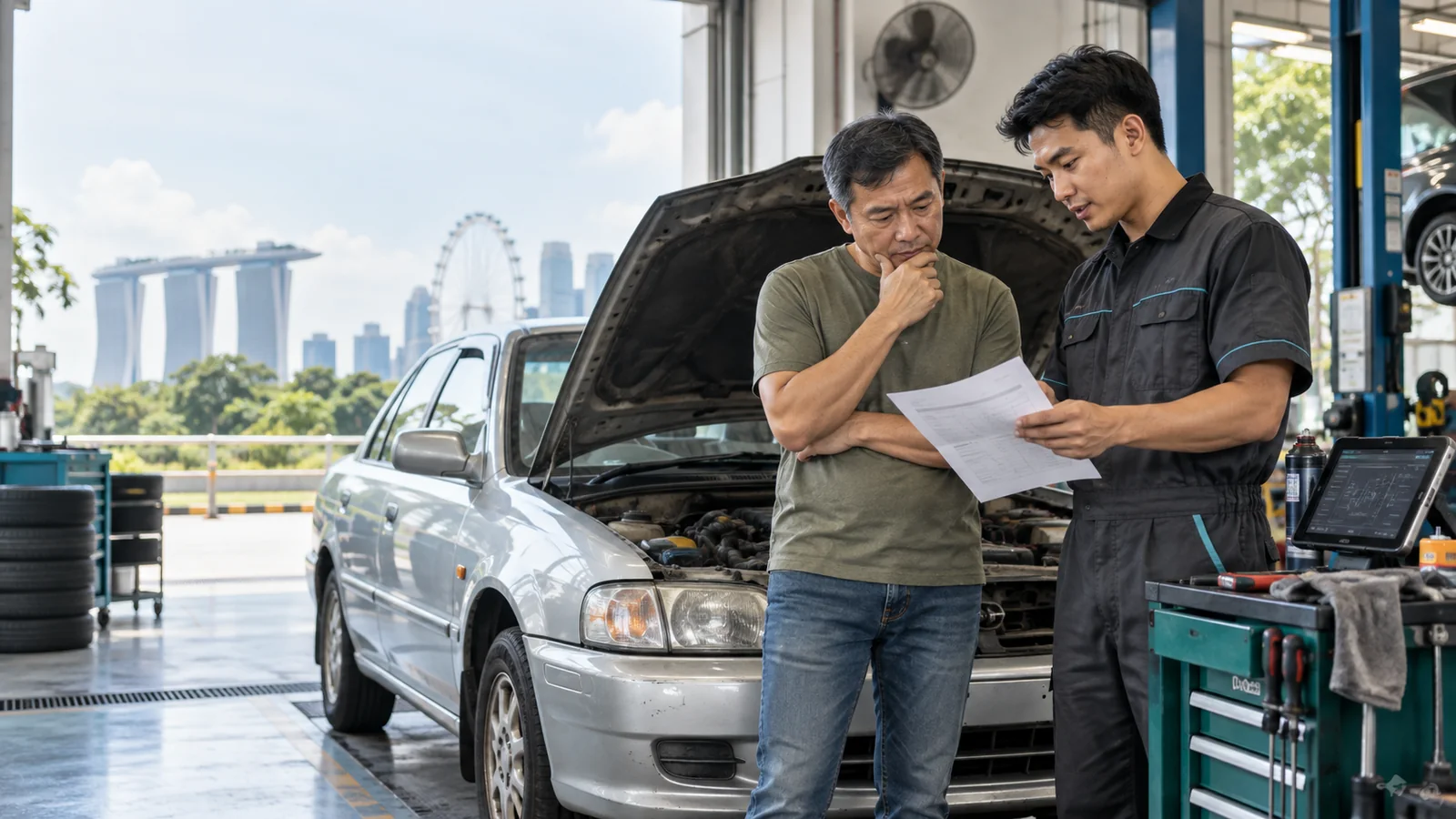
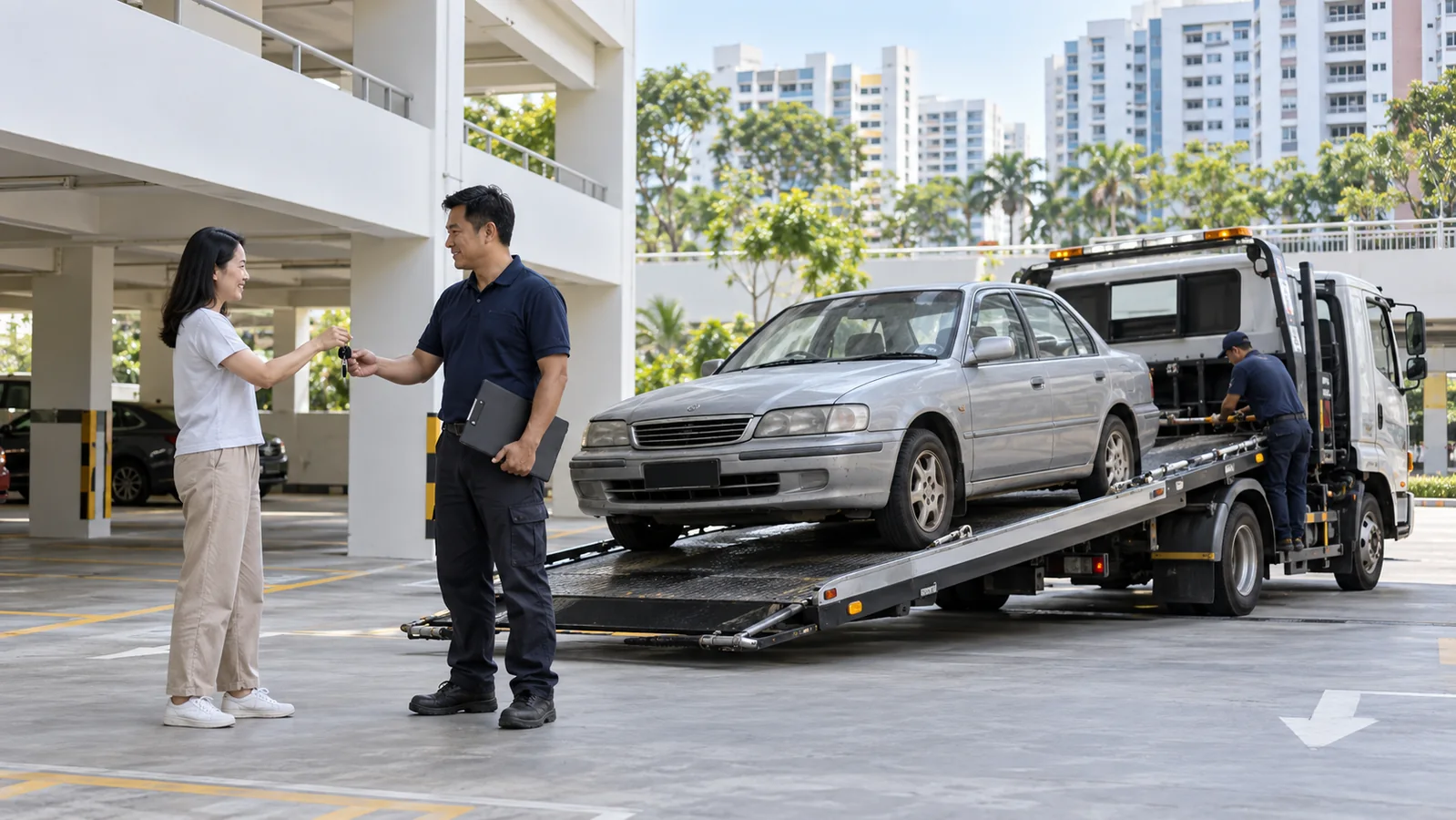
If you are searching for scrap car Singapore services, the immediate concern is often not another explanation of COE rebates. It is what happens on collection day: what to prepare, how the vehicle will be moved, when payment should arrive, and what proof to keep after handover.
The same practical questions come up when owners want to sell your car Singapore but the vehicle is old, damaged or no longer running and may not suit the usual resale market.
This FAQ stays focused on the hours before, during and after collection, so you can hand over the car without a last-minute surprise.
Quick Answer: What Should You Confirm Before Your Car Is Collected?
Before agreeing to a collection, confirm five things in writing:
- The final amount you are expected to receive
- Whether towing or collection is included
- Whether the quotation can change after inspection
- Who will complete the deregistration or disposal steps
- What proof of payment and handover you will receive
You should also confirm the correct sequence before deregistering the vehicle. The process differs depending on whether the vehicle is PARF-eligible, non-PARF-eligible, being scrapped or being exported.
Under LTA's current guidance, a deregistered vehicle can no longer be kept or used in Singapore. Vehicle owners are also responsible for ensuring that the vehicle is properly disposed of and that the required disposal documents are submitted on time.
1. Can a Scrap Car Be Collected From My Home?
In many cases, collection can be arranged from a home, workshop, office car park or another agreed location.
However, collection arrangements depend on the vehicle's condition and the accessibility of the location. A car that can still move safely may be collected differently from one with a seized engine, damaged wheels or steering problems.
Before booking, tell the buyer:
- Where the car is parked
- Whether it can start
- Whether it can roll and steer
- Whether the brakes are working
- Whether any wheels are missing or locked
- Whether the vehicle is in a basement or restricted car park
- Whether security clearance is required
Do not assume that every tow truck can enter a multi-storey or underground car park. Height restrictions, narrow ramps and tight turning areas can affect how the vehicle is removed.
A clear description of the location helps the collection team bring suitable equipment.
2. Can I Scrap a Car That Does Not Start?
Yes. A car does not need to be running to be considered for scrapping, parts recovery or another disposal route.
A non-running vehicle may still contain a usable gearbox, body panels, doors, lights, rims, electronic modules or interior components. The cause of the breakdown will influence how the vehicle is assessed.
When requesting a quotation, explain whether the car:
- Does not crank at all
- Cranks but does not start
- Starts but cannot be driven
- Has an engine or gearbox problem
- Has accident-damaged wheels or suspension
- Has been parked for an extended period
The buyer should know this before collection. If towing is needed, ask whether the cost is included in the quotation or deducted separately.
3. Can an Accident-Damaged Car Be Collected?
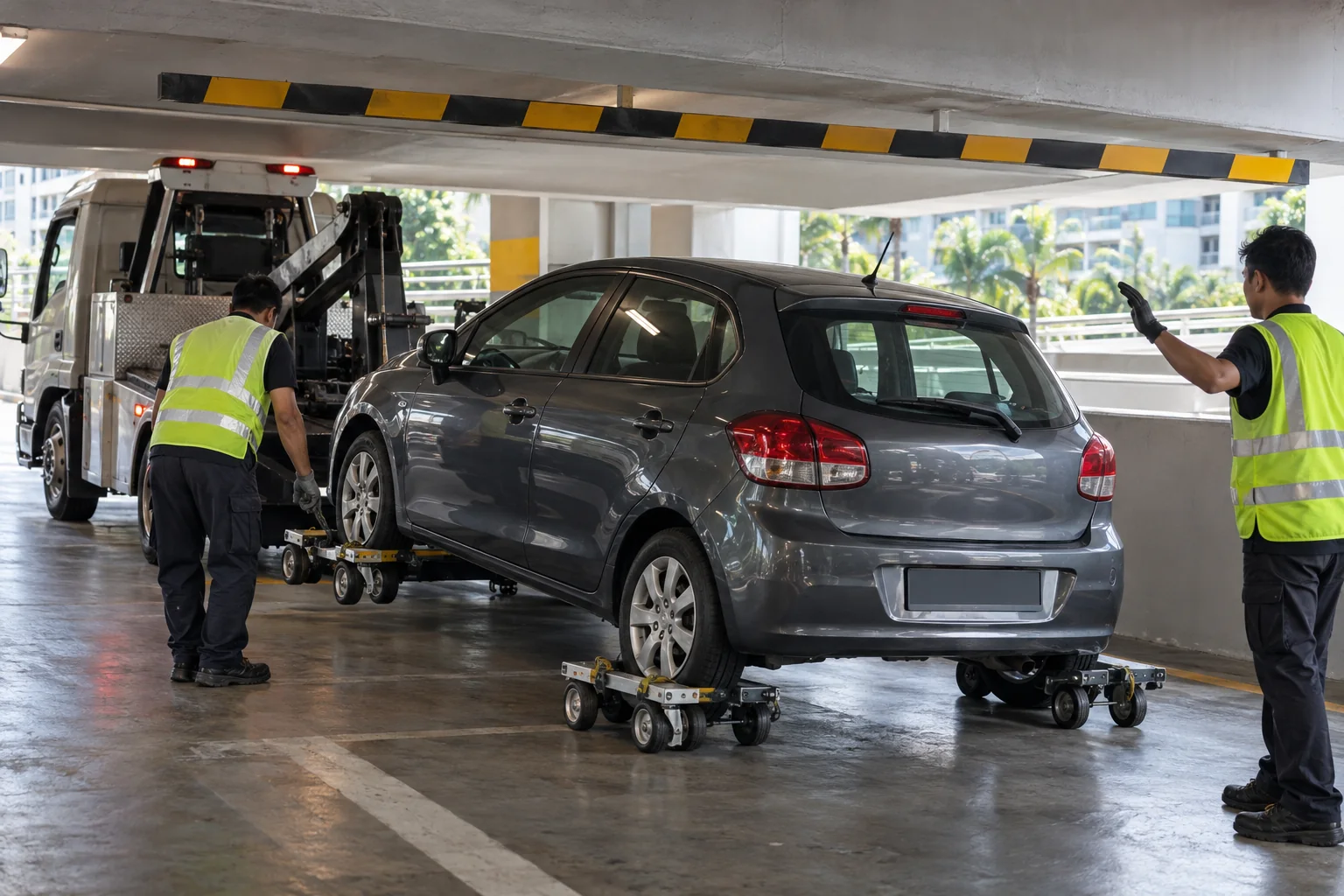
Yes, although the method of collection will depend on the damage.
A vehicle with a damaged bumper or body panel may still be movable. A car with collapsed suspension, locked wheels, steering damage or a serious collision may require specialised towing equipment.
Send photographs showing:
- The front and rear
- Both sides of the vehicle
- The damaged area
- The wheels and suspension
- The interior
- The engine compartment, where safe to access
Do not send only close-up photographs of the damage. Wider photographs help the buyer understand whether the car can be moved and loaded safely.
Being honest about the damage also reduces the chance of the offer changing when the collection team arrives.
4. What Information Should I Provide Before Asking for a Quote?
A registration number helps, but it is not enough for a dependable quotation.
Prepare the following information:
- Vehicle make and exact model
- Registration year
- COE expiry date
- Current mileage
- Engine capacity
- Transmission type
- General mechanical condition
- Accident, flood or fire history
- Missing or removed components
- Current vehicle location
- Recent photographs
Mention warning lights, overheating, oil leaks, unusual engine sounds and gearbox problems.
If an important component has already been removed, disclose it before the quotation is prepared. Missing engines, catalytic converters, wheels, batteries, electronic modules or body panels can affect both value and collection arrangements.
5. Should I Repair My Car Before Scrapping It?
Ask for an assessment before paying for repairs. In many cases, the repair bill will not add the same amount to the offer.
A major repair may not increase the offer by the same amount. For example, spending heavily on paintwork or mechanical work may make little financial sense if the vehicle will be dismantled for parts.
Basic preparation is still useful. You can clean the vehicle enough for its condition to be assessed and gather any maintenance records that may help explain its history.
Avoid making expensive repairs simply because you believe the car needs to look better before collection. Ask how the repair would affect the quotation first.
6. Can I Scrap a Car With an Outstanding Loan?
A vehicle should not remain under financing when it is being deregistered.
LTA advises vehicle owners to clear outstanding loans with their finance company and settle outstanding payments or matters relating to the vehicle.
Contact your finance company before agreeing to the handover. Ask for:
- The outstanding settlement amount
- Instructions for completing the settlement
- Confirmation of when the financing interest will be released
- Any document needed by the buyer or dealer
Do not assume that the buyer's quotation automatically settles your loan unless this has been clearly agreed and documented.
7. Should I Deregister the Car Before It Is Collected?
Do not deregister the vehicle until you have confirmed the correct procedure for your situation.
The sequence depends on the vehicle's eligibility and disposal route.
For a PARF-eligible vehicle being scrapped at an LTA-appointed scrapyard, LTA's current instructions state that the vehicle should be driven or towed to the scrapyard before it is deregistered using Singpass at the yard.
For a non-PARF-eligible vehicle, the owner can use LTA's digital service to authorise themselves or another person to scrap it. The authorised person must then bring the vehicle to an LTA-appointed scrapyard within the specified period.
LTA also states that scrapping services at appointed scrapyards are provided by appointment.
The practical rule is simple: arrange the handover first and follow the correct deregistration sequence. A deregistered vehicle cannot be kept or used on Singapore roads.
8. What Identification or Documents May Be Needed?
The exact requirements depend on the vehicle type, eligibility and method of disposal.
For PARF-eligible vehicles being scrapped, the owner generally completes the deregistration process at the appointed scrapyard using Singpass 2FA.
For certain non-PARF situations, the authorised person bringing the vehicle may need to present an original identification document. LTA accepts the relevant physical identity card or the Digital Identity Card in the Singpass app; photographs or videos of the identification document are not accepted.
Before collection, ask the buyer to provide a written list of what you need to prepare. This may include:
- Singpass access
- Identification document
- Vehicle details
- Finance settlement confirmation, where applicable
- Written quotation or purchase agreement
- Bank details for payment
- Authorisation information where someone else is handling the vehicle
Never send your Singpass password or one-time password to another person.
9. Does the Registered Owner Need to Be Present?
Not in every situation, but you should confirm the applicable authorisation requirements before collection.
For a non-PARF-eligible vehicle, LTA allows the registered owner to authorise another person to scrap the vehicle through its digital service. The authorised person must then follow the required timeline and bring the correct identification.
If you cannot attend the handover, confirm:
- Who is authorised to release the car
- Whether the buyer needs written authorisation
- Who will complete the Singpass transaction
- Who will receive the payment
- Whose identification must be presented
- Who will receive the collection acknowledgement
Do not leave these arrangements until the collection team is already at the location.
10. Can My Car Be Collected From a Workshop?
Yes, provided the workshop agrees to release it and any outstanding workshop charges have been settled.
Before arranging collection, speak with the workshop and confirm:
- Whether storage or repair charges remain unpaid
- Whether the vehicle can be released to a third party
- Who will hand over the keys
- Whether the car is movable
- Whether dismantled parts are still with the vehicle
- When the tow truck can enter the premises
Ask the workshop not to remove or dispose of additional components unless you have approved it.
A car that was assessed while complete may receive a revised offer if major components are missing at collection.
11. Can the Quoted Amount Change on Collection Day?
It can change when the actual vehicle is materially different from the details or photographs provided.
For example, a revision may be reasonable if:
- The engine or gearbox has been removed
- Accident damage was not disclosed
- The vehicle has severe flood or fire damage
- The car cannot be accessed or moved as described
- Important parts are missing
- The model or specification was recorded incorrectly
However, towing charges, administrative fees and ordinary collection costs should not appear unexpectedly if they could have been explained in advance.
Before accepting a quotation, ask:
Is this the net amount I will receive after collection, towing, inspection and administration?
Get the answer in writing.
12. When Should I Receive Payment?
The payment timing should be agreed before the car is collected.
Depending on the arrangement, payment may be made:
- Before collection
- At the point of handover
- After a final physical inspection
- After an agreed digital transaction is completed
There is no benefit in relying on vague phrases such as "payment will be processed later."
Ask for:
- The final payable amount
- Payment method
- Name of the paying company or individual
- Expected payment stage
- A receipt or written payment acknowledgement
Confirm that the payment details match the company or person with whom you made the agreement.
13. What Should I Remove From the Car?
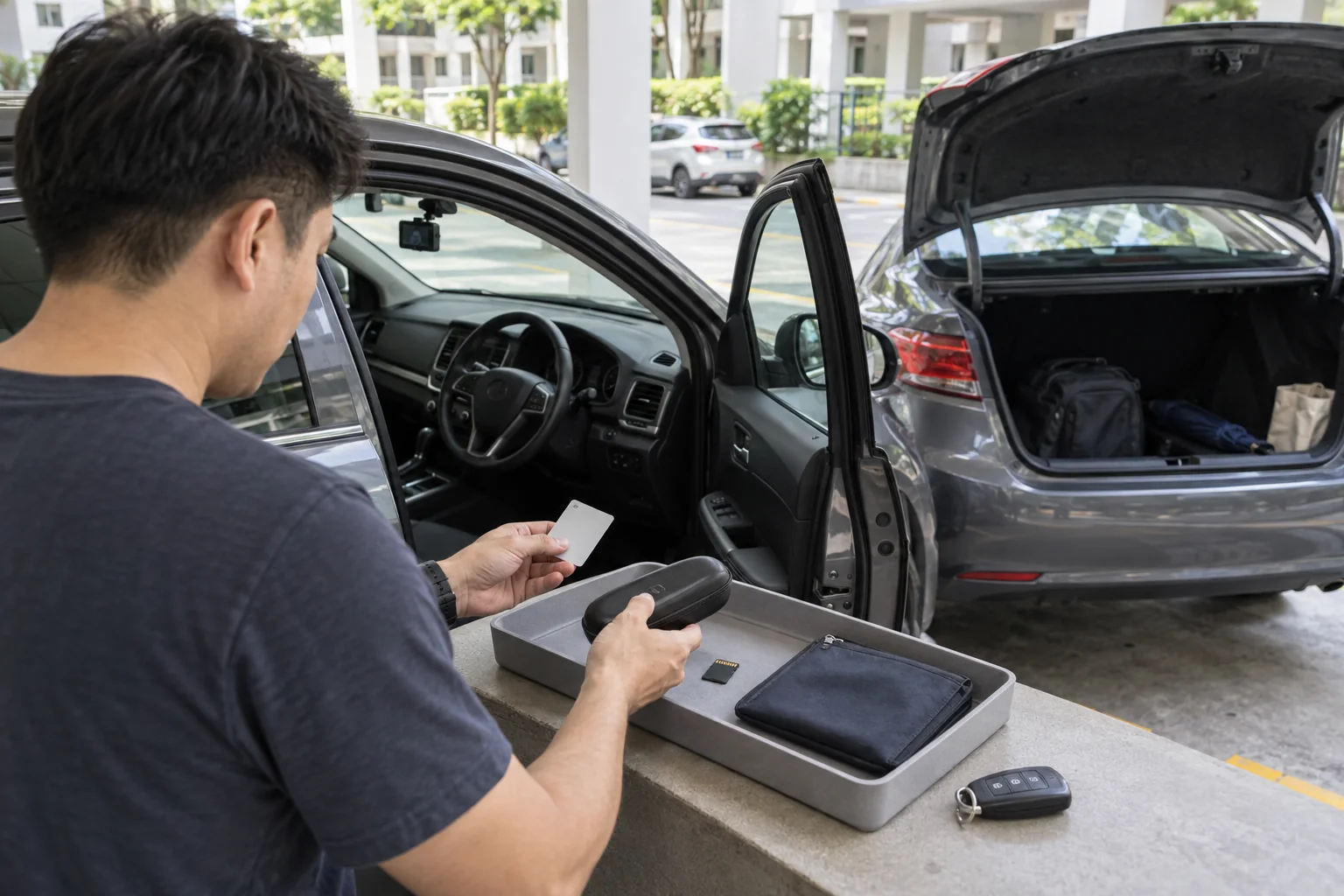
Remove all personal belongings before the collection team arrives.
Check places that are easy to overlook:
- Glove compartment
- Centre console
- Door pockets
- Boot compartments
- Under the seats
- Seat-back pockets
- Sunglasses holder
- Spare-wheel compartment
Remember to remove:
- Stored-value or parking cards
- Condominium access cards
- Office parking labels
- Personal documents
- Dashcam memory cards
- Toll or access devices that belong to you
- Garage remotes
- Spare house or office keys
- Personalised accessories not included in the sale
Check whether the quotation includes both vehicle keys. Do not remove factory-fitted parts after agreeing to sell the complete vehicle unless the buyer has approved it.
14. Can I Drive the Car After It Has Been Deregistered?
No.
LTA states that once a vehicle has been deregistered, it can no longer be kept or used in Singapore. It must be scrapped, exported or stored temporarily in an appointed Export Processing Zone pending export.
This is why the deregistration and physical handover need to be coordinated carefully.
Do not deregister the car while planning to continue driving it for several more days. Arrange the final journey or towing before completing the transaction.
15. Can I Keep My Car Registration Number?
Yes, vehicle owners can apply to retain their vehicle registration number.
LTA allows retention before the vehicle is transferred or deregistered. It may also be retained after deregistration once the disposal details have been updated in LTA's records.
The current deadline for retaining the number after deregistration is one month from the deregistration date. Fees and additional conditions apply.
If the registration number is important to you, raise this before collection. Do not assume it can be recovered at any time later.
16. What Proof Should I Keep After Handover?
Keep a complete record of the transaction.
Your file should include:
- Written quotation
- Purchase or handover agreement
- Payment confirmation
- Collection acknowledgement
- Photographs taken at handover
- Name and contact details of the collector
- Vehicle status confirmation
- Relevant deregistration or disposal records
- WhatsApp, email or SMS conversations
LTA states that the vehicle owner remains responsible for deregistering the vehicle, disposing of it properly and ensuring that disposal documents are submitted within one month of the deregistration date.
Do not treat the transaction as complete simply because the tow truck has left.
17. How Can I Confirm That the Process Is Complete?
Check the vehicle status through the appropriate OneMotoring digital service and keep any notification sent by LTA.
You should be able to confirm:
- Whether the vehicle has been deregistered
- Whether disposal details have been updated
- Whether there are outstanding road tax arrears or fees
- Whether any applicable PARF or COE rebates are reflected
- Whether the retained registration number request, if any, is complete
If a dealer or vehicle buyer is assisting with the process, ask them to explain which steps they are completing and which steps remain your responsibility.
18. When Should I Cancel Insurance and Other Vehicle Services?
Avoid cancelling essential vehicle arrangements too early if the car still needs to be driven legally to the collection or disposal location.
Once the handover and official vehicle status have been confirmed, contact the relevant providers regarding:
- Motor insurance
- Season parking
- Workshop plans
- Roadside-assistance membership
- Vehicle tracking subscriptions
- In-car connectivity services
- Private parking access
- Finance-related arrangements
Insurance cancellation and refund terms differ between insurers. Ask your insurer what documents it requires and whether any unused premium is refundable.
19. How Do I Avoid a Last-Minute Scrap Car Dispute?
Most disagreements begin because the quotation, vehicle condition or responsibilities were not clearly recorded.
Before collection, make sure both sides agree on:
- The vehicle being sold
- Its disclosed condition
- The final or conditional price
- Collection and towing charges
- Payment timing
- Responsibility for official procedures
- Proof that will be provided after handover
Photograph the vehicle immediately before it leaves. Include the registration number, exterior condition and any major damage.
Clear records protect both the owner and the buyer.
20. How Do I Choose a Reliable Car Buyer?
The highest number in the first message is not always the strongest offer. Look at the terms behind it.
Look for:
- A clear company name
- A working telephone number and business address
- A written quotation
- Transparent collection terms
- A clear explanation of deductions
- A defined payment process
- Proper handover documentation
- Willingness to explain the deregistration or disposal route
Be cautious when someone pressures you to transfer or deregister the vehicle immediately without explaining what will happen next.
A professional buyer should be willing to answer practical questions before asking for your keys or vehicle.
How Everise Auto Can Help
Everise Auto supports owners who want to dispose of an end-of-term, used or damaged vehicle. Its vehicle-selling service states that the company assists with physical handling, administration and paperwork as part of its one-stop process.
When asking Everise Auto for an assessment, provide:
- Vehicle make and model
- Registration year
- COE expiry date
- Current mileage
- Current location
- Mechanical condition
- Accident history
- Recent photographs
Final Checklist Before Collection
Before your vehicle leaves, confirm that:
- You have received the final written quotation.
- Collection or towing charges are clear.
- The vehicle condition has been fully disclosed.
- Personal belongings have been removed.
- Payment timing has been agreed.
- You know who is handling each official step.
- You have photographed the car.
- You will receive proof of collection.
- You know how to verify the vehicle's status afterward.
- You have addressed registration-number retention, where required.
Ready to Scrap or Sell Your Car in Singapore?
A scrap my car Singapore enquiry should end with more than a price. You should know how collection will work, when payment is due, who handles each official step, and how to confirm that the process is complete.
For an assessment based on the vehicle's actual condition, contact Everise Auto with the model, registration year, COE expiry date, location, fault details and recent photographs.