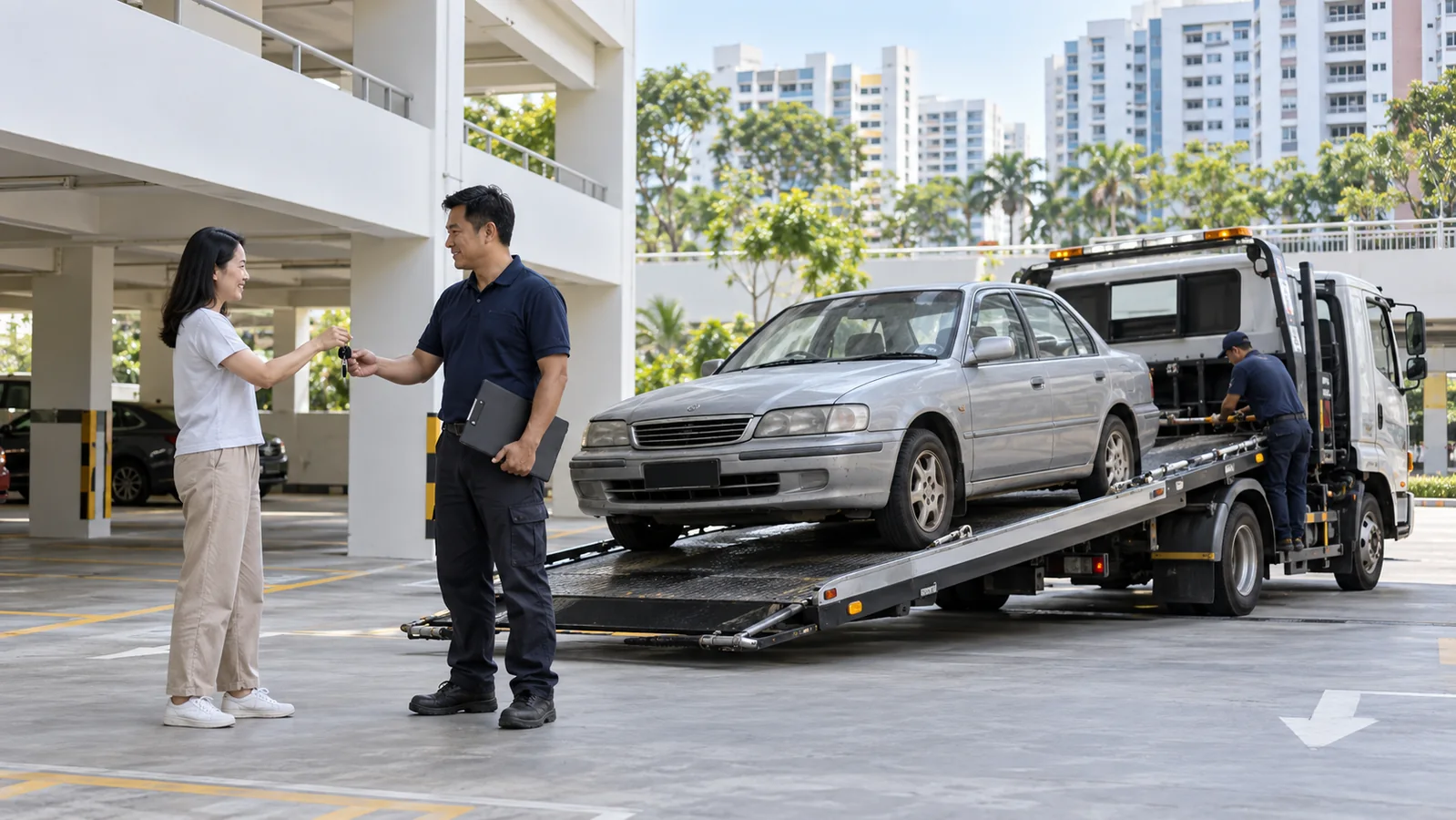

Buying a used car in Singapore requires more than scanning listings; it demands a clear grasp of COE dynamics, PARF rebates, OMV-driven taxes, and how LTA processes affect total ownership cost. This guide explains the core concepts—Certificate of Entitlement (COE), Preferential Additional Registration Fee (PARF), Open Market Value (OMV), road tax and insurance—so you can set a realistic budget and avoid common pitfalls. You will learn practical budgeting steps, research techniques to benchmark market value, an inspection and test-drive protocol, financing comparisons, and the step-by-step LTA transfer process. Along the way the article offers decision rules for COE renewal versus replacement, a structured pre-purchase inspection checklist, and clear advice on dispute pathways like Lemon Law claims. Read on for concise tables, actionable numbered checklists, and examples that translate abstract fees into everyday buying decisions for used car buyers in Singapore.
What Are the Key Costs and Legal Requirements When Buying a Used Car in Singapore?
Understanding the major cost components and legal steps upfront prevents surprises at purchase and during ownership. Major financial drivers include COE remaining tenure, PARF rebates if applicable, OMV-based duties, road tax bands, and insurance premiums; each component directly influences the sale price, recurring costs, and transfer obligations with LTA. Legally, buyers must ensure correct documentation for LTA transfer and confirm the vehicle’s status (no encumbrances, correct road tax and insurance). These elements form the baseline for valuation and negotiation, and the following subsections break down how each entity affects price and ownership. After we cover these elements in detail, you’ll see how they feed into budgeting, financing and the final transfer process.
How Does the Certificate of Entitlement Affect Used Car Prices and Ownership?
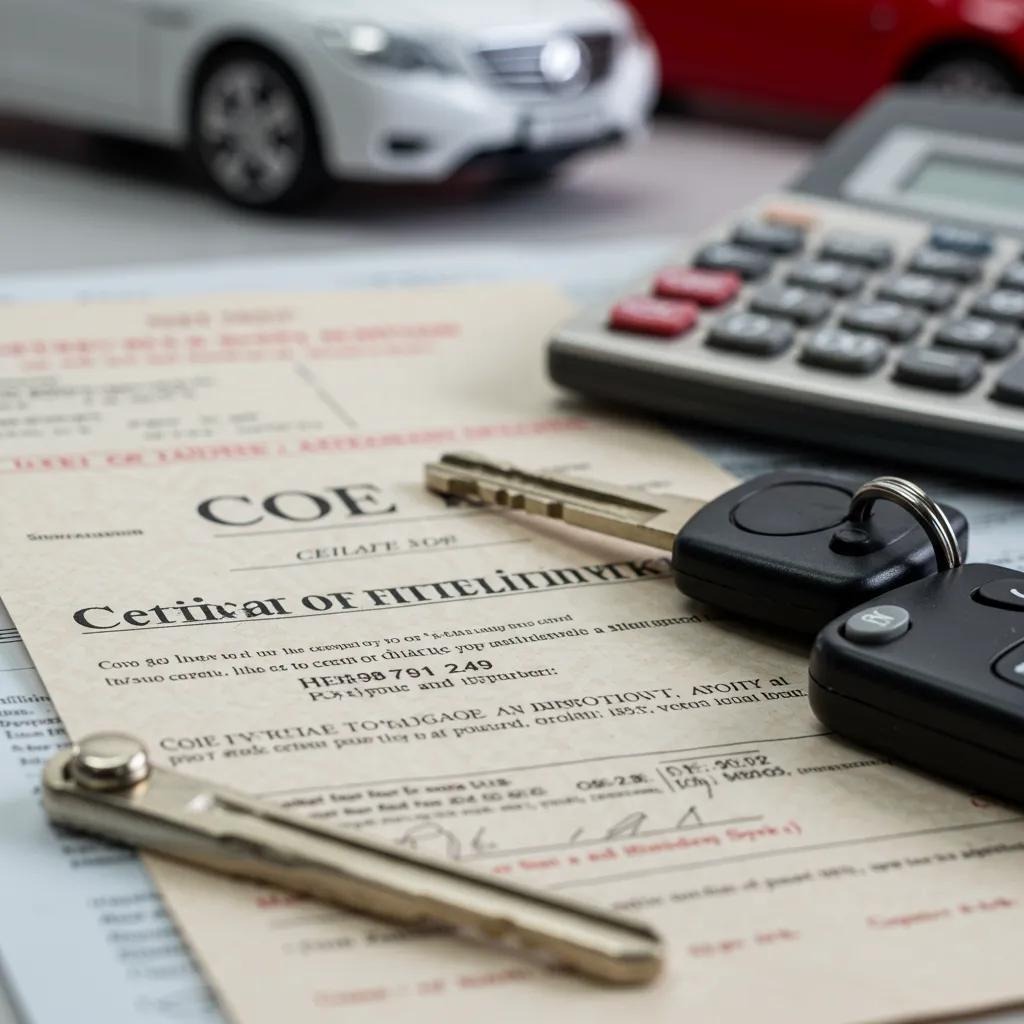
The Certificate of Entitlement (COE) is a tradable right to own and use a vehicle for a set tenure, and its remaining duration directly affects a used car’s market price because buyers effectively purchase both the vehicle and the remaining COE value. Short remaining COE means the buyer inherits imminent expiry risk, typically reducing the asking price and constraining loan tenure since lenders often cap loan term to COE expiry; conversely, long COE remaining preserves resale value and allows longer, lower monthly repayments. For example, Car A with three years of COE left may sell for a noticeably higher premium than Car B with eight months left because Car B’s buyer faces renewal or scrappage decisions soon after purchase. Understanding this mechanism helps buyers prioritise offers where COE tenure aligns with intended holding period. Knowing COE timelines also leads directly into evaluating the PARF rebate and trade-in implications.
What Is the Preferential Additional Registration Fee and How Does It Influence Costs?
Preferential Additional Registration Fee (PARF) is a rebate mechanism that returns part of the vehicle’s original registration value when an owner deregisters a qualifying vehicle before a threshold age, and this rebate influences trade-in and resale valuations for qualifying used cars. PARF eligibility typically depends on vehicle age and original registration class, and sellers often factor expected PARF rebate into asking price because trade buyers or dealers anticipate reclaiming part of the original ARF. A simple calculation example: if a qualifying vehicle originally attracted a certain ARF band, a portion of that amount will be refundable on deregistration and thus adds to the residual value that a dealer can pay a private seller. Buyers should ask sellers about PARF eligibility and recent deregistration examples because PARF affects how much a dealer might offer versus private sale value. After assessing PARF, the next cost drivers to compare are OMV, road tax and insurance ranges.
What Are the Typical Costs for Road Tax, Insurance, and Open Market Value?
Open Market Value (OMV) is the customs-assessed value used in duty and tax calculations, and OMV combined with engine capacity and VES classification affects road tax and insurance premiums for used cars in Singapore. Road tax is banded by engine capacity and partly influenced by emissions, while insurance premiums depend on vehicle age, model theft/accident statistics, declared value and driver profile; both are recurring ownership costs buyers must budget for. Typical annual ranges vary by car type—smaller-engine second-hand sedans usually attract lower road tax and insurance than high-capacity SUVs—so comparing OMV and vehicle specs across listings clarifies ongoing cost expectations. Knowing these ranges lets buyers compute a realistic annual cost-of-ownership p and prepares them for negotiation and financing decisions. With cost components clear, it is essential to understand Lemon Law protections available if defects appear after purchase.
Introductory table summarising numerical effects for quick comparison:
| Cost Component | How It’s Calculated | Typical Effect on Total Cost |
|---|---|---|
| COE remaining tenure | Market COE price × remaining years value | Large impact on sale price and loan tenure |
| PARF rebate | Pro-rated ARF refund on deregistration | Increases trade-in value if eligible |
| OMV | Customs-assessed vehicle value | Base for duties and influences purchase tax |
| Road tax | Engine capacity / emissions band | Recurring annual cost varying by car size |
| Insurance premium | Model risk profile + driver factors | Recurring cost; higher for older/repair-prone cars |
Understanding these entities lets buyers translate listing prices into actual ownership expenses and follow with a practical budget and research plan.
How Do You Set a Budget and Research the Used Car Market in Singapore?
Setting a realistic budget combines upfront purchase price with total cost of ownership (TCO) projections and a contingency for repairs; sound market research benchmarks model-specific resale values and reveals common fault patterns. Start by calculating upfront cash available, maximum acceptable monthly payment, and set aside contingency equal to several hundred to a few thousand dollars depending on car age and mileage. Then use multiple listing sources, forums and valuation tools to compare prices for the same make/model/mileage, spotting outliers that are too cheap or suspiciously high. The following H3s guide factors to include in your budget, where to research reliability and how to vet dealers and private sellers. After budget setting and research, inspection and test driving convert knowledge into actionable evaluation.
What Factors Should You Consider When Setting Your Used Car Budget?
When building a budget, include the purchase price, estimated COE depreciation or remaining COE risk, anticipated insurance and road tax, routine servicing, and a contingency for unexpected repairs to avoid being cash-strapped after purchase. Consider loan-related costs if financing—including deposit, interest, and any loan admin fees—and ensure monthly payments fit comfortably within income after other expenses. Prioritise whether you value lower monthly payments (longer tenure, subject to COE limits) or lower total interest (larger deposit, shorter tenure), and remember to include potential PARF benefits if applicable when comparing trade-in offers. Setting a clear budget upfront simplifies negotiation and narrows suitable models. With budget boundaries set, targeted research on model reliability becomes effective.
How to Research Reliable Used Car Models and Their Market Values?
Research model reliability by cross-referencing owner forums, consumer review aggregators, and service bulletin histories to identify common faults and long-term ownership costs specific to Singapore’s climate and roads. Compare multiple listings of the same year/mileage to derive a market price band and watch for repeated seller descriptions that hint at recurring issues (e.g., known transmission faults or electrical gremlins). Pay attention to service history completeness, recall notices and whether replacement parts are readily available and affordable, since availability affects maintenance cost. Combining price benchmarking with reliability checks helps you prioritise models that offer the best long-term value rather than just the lowest upfront price. After pinpointing reliable models, decide whether to buy from a dealer or private seller based on documentation and guarantees.
Where Can You Find Trusted Used Car Dealers and Private Sellers in Singapore?
Trusted channels include certified dealer showrooms with inspection and warranty options, reputable marketplaces with seller ratings, and private sales where full service history and original documents are verifiable; choose based on your risk tolerance and need for warranty protection. Vet dealers by asking about certified pre-owned programs, service records, and post-sale warranty terms, while vetting private sellers requires checking NRIC and transfer paperwork, original receipts and a transparent service history. Use escrow-like banking practices for payment where available, insist on a written receipt, and arrange a clear handover process that aligns with LTA transfer requirements. Evaluating sellers carefully reduces fraud risk and sets up a smoother ownership transfer, which we detail in the inspection and test-drive phase next.
What Are the Essential Steps for Inspecting and Test Driving a Used Car?

A systematic inspection and test drive separate negotiable cosmetic issues from functional mechanical faults, and a structured approach reduces the chance of missing critical defects. Begin with an exterior and underbody walkaround, move to engine bay checks and interior systems, then perform a staged test drive covering cold starts, acceleration, braking, and varied road conditions. If initial checks flag concerns or service history is incomplete, order a professional Pre-Purchase Inspection (PPI) that reports on chassis alignment, engine compression, structural repairs, and fluid condition. Below is an inspection checklist table that condenses what to check, what good condition looks like, and red flags that should prompt either negotiation or refusal to buy. After the checklist, a clear test-drive protocol explains exactly what to listen and feel for while driving.
Intro to inspection checklist table:
| Component | What to Check | Red Flags |
|---|---|---|
| Exterior/body | Panel gaps, paint consistency, rust signs | Uneven gaps, overspray, corrosion |
| Engine bay | Fluid levels, leaks, belt condition | Oil/water leaks, sludge, worn belts |
| Undercarriage | Suspension mounts, exhaust condition | Severe rust, bent subframe, leaks |
| Interior/electrics | Aircon, infotainment, odometer match | Non-functioning systems, tampered odometer |
| Service history | Receipts, timing belt records | Missing records, inconsistent mileage |
What Should a Comprehensive Used Car Inspection Checklist Include?
A comprehensive checklist covers exterior panel alignment and paint, tyre wear and matching, underbody rust checks, engine oil condition, coolant clarity, visible leaks, suspension play, transmission shifts, steering play, brake pad thickness, and full functionality of electrics and safety systems. Verify odometer readings against service receipts and look for signs of accident repair such as inconsistent welds or replaced panels; inconsistent documentation is a major red flag. Check for water ingress in carpets and boot that suggests past flooding, and inspect tyre condition for uneven wear which can indicate alignment or suspension problems. This thorough sweep distinguishes cosmetic issues from structural or mechanical faults that materially affect safety and resale value. When in doubt, the next step is a targeted test drive to corroborate written observations.
How Can You Effectively Test Drive a Used Car?
Design a test-drive route that includes city driving, higher-speed expressway sections, and uphill/downhill stretches to test acceleration, gear changes, braking, steering response and suspension comfort under varied loads. Start with a cold engine check: listen for irregular noises at startup, monitor idle stability and look for smoke from the exhaust; then accelerate through gear ranges to feel transmission shifts and engine responsiveness. Perform repeated medium-to-hard braking to confirm stopping smoothness and detect pulse in the steering wheel that suggests warped rotors; drive over bumps to assess suspension noise and rebound. Throughout the drive, check for dashboard warning lights and test all interior features; document any anomalies to use in negotiation or to request a PPI. A structured test drive naturally leads to considering whether a PPI is necessary.
When Should You Consider a Professional Pre-Purchase Inspection?
Order a professional Pre-Purchase Inspection when the car has high mileage, incomplete service history, signs of past repairs or cosmetic inconsistencies, or when you’re buying from a private seller who offers no warranty. A PPI performed by a certified technician provides a diagnostic report on engine health, transmission condition, chassis integrity and potential future maintenance costs, helping you quantify repair risk and set negotiation thresholds. Compare the PPI cost to the potential savings from avoiding a problematic purchase—spending a modest amount on inspection often prevents far larger repair bills down the road. Choose providers with clear reporting format and photographic evidence so you can present findings to sellers or lenders if needed. After inspection, you’ll be better placed to decide on financing options.
What Financing Options Are Available for Buying Used Cars in Singapore?
Financing a used car in Singapore typically involves bank loans or in-house financing by dealers, each with differing loan-to-value (LTV) ratios, interest rates and approval criteria; lenders also limit loan tenure by remaining COE life which affects monthly repayment levels. Bank loans generally offer lower interest rates and stricter income and documentation requirements, while in-house financing can be faster with more flexible acceptance but often at higher effective cost. Loan LTV depends on OMV thresholds and recent regulatory guidance, and COE remaining tenure commonly caps the maximum loan tenor to ensure the loan matures before COE expiry. The table below compares lender types, typical LTVs and tenure constraints to help you choose based on affordability and risk tolerance. After financing choice, prepare documentation and understand how COE tenure can change repayment planning.
Intro to financing comparison table:
| Lender Type | Typical Loan-to-Value | Max Tenure (COE-related) | Notes |
|---|---|---|---|
| Banks | Higher LTV for lower OMV vehicles | Tenure capped at COE expiry | Lower interest, stricter checks |
| In-house dealer finance | Lower LTV or higher downpayment | Tenure often capped similarly | Faster approval, higher rates/fees |
| Licensed finance companies | Variable LTV | Tenure depends on policy | Alternative for borderline applicants |
How Do Used Car Loans Work and What Are the Eligibility Criteria?
Used car loans function like secured loans where the vehicle serves as collateral; lenders assess income stability, credit history, vehicle OMV, and remaining COE to determine approved LTV and interest rate. Typical documentation includes proof of income, identity, bank statements and the vehicle particulars; some lenders also require recent service records and a valuation report. LTV percentages and interest rates vary with lender risk appetite, borrower credit and the vehicle’s age and COE remaining life. Always compare the effective interest rate and total repayment amount rather than focusing solely on the headline rate, because fees and insurance requirements can change the true cost. Loan approval procedures and documentation preparation naturally affect whether you prefer bank or dealer financing.
What Are the Differences Between Bank Loans and In-House Financing?
Banks tend to offer lower interest rates and higher regulatory transparency, but with stricter eligibility checks and longer processing times, while in-house financing often approves faster, accepts riskier profiles, and layers on higher rates or add-on products. Banks may require higher minimum documentation and may restrict LTV for older vehicles, whereas dealer financing can bundle warranties or maintenance packages but increase total cost through higher APR. Negotiation strategy differs: with banks you negotiate deposit and loan terms, while with in-house offers you must scrutinise add-ons, hidden fees and early repayment penalties. Choose based on whether you prioritise lower long-term cost or faster settlement and convenience. The COE tenure constraint is the next important financing detail to check before finalising loan structure.
How Does COE Tenure Affect Loan Tenure and Repayment Terms?
Lenders typically limit loan tenure so that repayment completes at or before COE expiry, because the vehicle’s legal road use right ends with COE expiry which would complicate collateral recovery and residual value. This means a car with short COE remaining forces shorter loan tenures and higher monthly payments, or requires a larger deposit to reduce loan principal; alternatively the buyer may choose to plan for renewal costs soon after purchase. For example, a shorter remaining COE can increase monthly payments materially compared to a similar-priced car with longer COE, changing affordability calculus. Consider how COE tenure interacts with your intended ownership horizon and refinancing options; this interaction links directly to the final transfer steps with LTA.
How Do You Complete the Purchase and Ownership Transfer Process with LTA?
Completing purchase and transfer with LTA requires coordinated steps between seller, buyer and insurer to ensure legal change of ownership, road tax registration and insurance activation; following the correct sequence and providing accurate documents avoids delays and penalties. The basic workflow uses official LTA procedures to transfer ownership, settle outstanding road tax, and confirm insurance cover for the new policy period; both seller and buyer have defined responsibilities to sign forms and confirm declarations. Timely coordination also avoids lapses in insurance that would prevent road tax registration, and prepares you for subsequent COE renewal or deregistration decisions. The next subsections detail step-by-step transfer procedures, insurance activation and the exact documents and fees to prepare before visiting the LTA portal.
What Are the Step-by-Step Procedures for Transferring Ownership with LTA?
Transfer begins with seller and buyer agreeing on price and obtaining a signed Notice of Transfer, then both parties complete and submit the required forms through the relevant LTA portal or authorised agent within the stipulated timeframe. The buyer must ensure insurance cover is in place from the transfer date and that the vehicle is free of outstanding loans or encumbrances; the seller must clear any outstanding road tax and provide all vehicle documents and service history. After electronic submission, LTA processes the transfer, generates confirmation and updates vehicle registration records; allow for standard processing timelines and verify the updated registration details promptly. Always retain copies of electronic receipts and verification screenshots for your records, as these documents are useful if questions arise during the insurance or road tax setup.
How Do You Activate Car Insurance and Register Road Tax After Purchase?
Activate insurance by purchasing a policy that starts on the transfer date and by providing proof-of-insurance when prompted for road tax registration; insurers typically issue a policy schedule or cover note which you should keep as evidence for LTA processes. Road tax registration requires the vehicle’s particulars, proof-of-insurance and payment; some buyers choose to pre-arrange electronic payment methods to avoid delays. Coordinate with your insurer to confirm the policy includes named driver coverage as needed and that no lapses occur between old and new policies to prevent legal exposure. Ensuring insurance activation before road tax registration keeps the transfer compliant and paves the way for immediate legal use of the vehicle—next, prepare the documents and fee checklist to avoid rejected transfers.
What Documents and Fees Are Required for Ownership Transfer?
Prepare original NRIC copies of seller and buyer, signed transfer forms, vehicle registration book, valid insurance proof, service history if available, and payment for transfer fees and any outstanding road tax; missing documents commonly delay the process. Typical fees include transfer administration charges and any penalties for late road tax renewal; verify expected amounts beforehand so you can settle them electronically during the transfer workflow. It’s prudent to double-check document completeness—signed forms, accurate NRIC details and consistent mileage records—to avoid re-submissions. A final verification step after LTA confirmation ensures the transfer is recorded correctly and links back to financing and insurance arrangements.
What Should You Know About Long-Term Ownership and Maintenance of Used Cars?
Long-term ownership planning covers depreciation trajectory, scheduled servicing, parts availability and decisions about COE renewal versus replacement; proactive maintenance preserves resale value and reduces unexpected failures. Depreciation accelerates as COE expiry approaches because the effective usable lifespan is shorter, and high-mileage vehicles often command steeper maintenance budgets for parts like tyres, brakes and batteries. Establish a maintenance schedule—periodic oil changes, timing-belt checks, brake servicing and tyre rotation—to prevent small issues from becoming costly repairs. Below we examine depreciation dynamics, recommended servicing practices, and a decision framework for COE renewal versus buying a replacement vehicle.
How Does Depreciation Affect Your Used Car’s Resale Value Over Time?
Depreciation follows a curve where age, mileage and remaining COE dominate value erosion; cars lose a larger percentage of value early on, with COE expiry causing a steep effective drop in resale value as ownership rights near termination. Maintenance and complete service history slow depreciation by signalling good care to buyers, while accident or flood history accelerates value loss. For decision-making, track comparable market prices for your model across time to estimate expected future resale value at anticipated sell dates and avoid buying a vehicle that will fall below expected residuals. Understanding depreciation patterns informs whether COE renewal or replacement will be more cost-effective when the COE nears expiry.
What Are the Recommended Maintenance and Servicing Tips for Used Cars?
Maintain basic preventive routines: oil and filter changes per manufacturer intervals, brake inspections every 10,000–20,000 km, tyre rotation and alignment as needed, battery checks annually, and timely replacement of wear items such as brake pads and timing belts. Keep meticulous service records and receipts, as these improve resale prospects and help diagnose recurring issues more quickly; they also support warranty or Lemon Law claims if defects emerge. Budget for periodic consumables and plan for larger items (e.g., a new battery or tyres) within your contingency fund to avoid emergency expenses. Good maintenance practice reduces long-term cost and supports better resale or trade-in offers when you next evaluate COE renewal or replacement.
When and How Should You Consider COE Renewal or Car Replacement?
Consider COE renewal when the renewal cost plus expected repair/maintenance over the next ten years is lower than acquiring a comparable replacement car with a fresh COE; replacement becomes attractive when repair frequency rises, parts become scarce or the renewal cost is disproportionate to the car’s residual value. Use a break-even calculation: compare renewal price plus projected maintenance against the market price of equivalent used cars and the new COE cost spread over your planned ownership horizon. Factor in intangible benefits like improved fuel efficiency or warranty coverage with a replacement. This financial decision ties back to depreciation and servicing forecasts established earlier.
How Can You Avoid Scams and Protect Yourself When Buying a Used Car in Singapore?
Avoiding scams requires awareness of common red flags, use of official dispute channels such as Lemon Law processes, and reliance on trusted inspection and valuation services; a cautious, documentation-first approach reduces exposure to fraudulent practices. Common scams include tampered odometers, incomplete service histories, disguised structural repairs, and pressure to pay before seeing vehicle or documents. If a dispute arises, Lemon Law and consumer protection processes offer pathways for remediation when statutory conditions are met. Below are practical red flags and resources to consult to protect your purchase and to escalate problems when necessary.
What Are Common Red Flags to Watch Out for in Used Car Deals?
Watch for inconsistent or missing service records, mismatched odometer history, pressure tactics to close the deal immediately, vehicle sold significantly below market value without clear explanation, and reluctance to allow independent inspection or a test drive. Other red flags include sellers who insist on cash-only payments without receipts, vague responses about past repairs, or documentation that appears altered; these signs suggest higher fraud risk. If you encounter these indicators, step back and insist on a PPI and verifiable records, or walk away if answers are unsatisfactory. Spotting red flags early prevents costly commitments and leads naturally to understanding legal recourse options.
How Does Singapore’s Lemon Law Help Resolve Disputes?
Singapore’s Lemon Law offers consumer remedies when a vehicle has a defect that substantially impairs its use, value or safety within a statutory period and where the defect is not due to misuse; it provides a structured dispute-resolution path for eligible cases. To use Lemon Law, document defects thoroughly, obtain independent inspection reports and present repair invoices and correspondence; this evidence supports claims and expedites resolution with sellers or service providers. Remedies can include repair, replacement or refund depending on the defect severity and timing; however, eligibility depends on the transaction type and condition disclosures made at sale. Knowing how Lemon Law applies helps buyers pursue formal remedies when significant undisclosed defects appear.
Where Can You Find Trusted Resources and Support for Used Car Buyers?
Trusted resources include official vehicle-regulatory authorities for transfer and compliance guidance, consumer protection agencies for dispute resolution and certified inspection providers for objective PPI reports; community forums and owner groups provide model-specific reliability insights. Use official portals for LTA procedural guidance and consult reputable inspection shops for documented assessments you can present to sellers or lenders. When disputes escalate, consumer dispute resolution channels and independent mediators offer structured ways to pursue claims under applicable consumer protection frameworks. These resources form a safety net that complements careful inspection, thorough documentation and prudent budgeting begun earlier in the buying process.