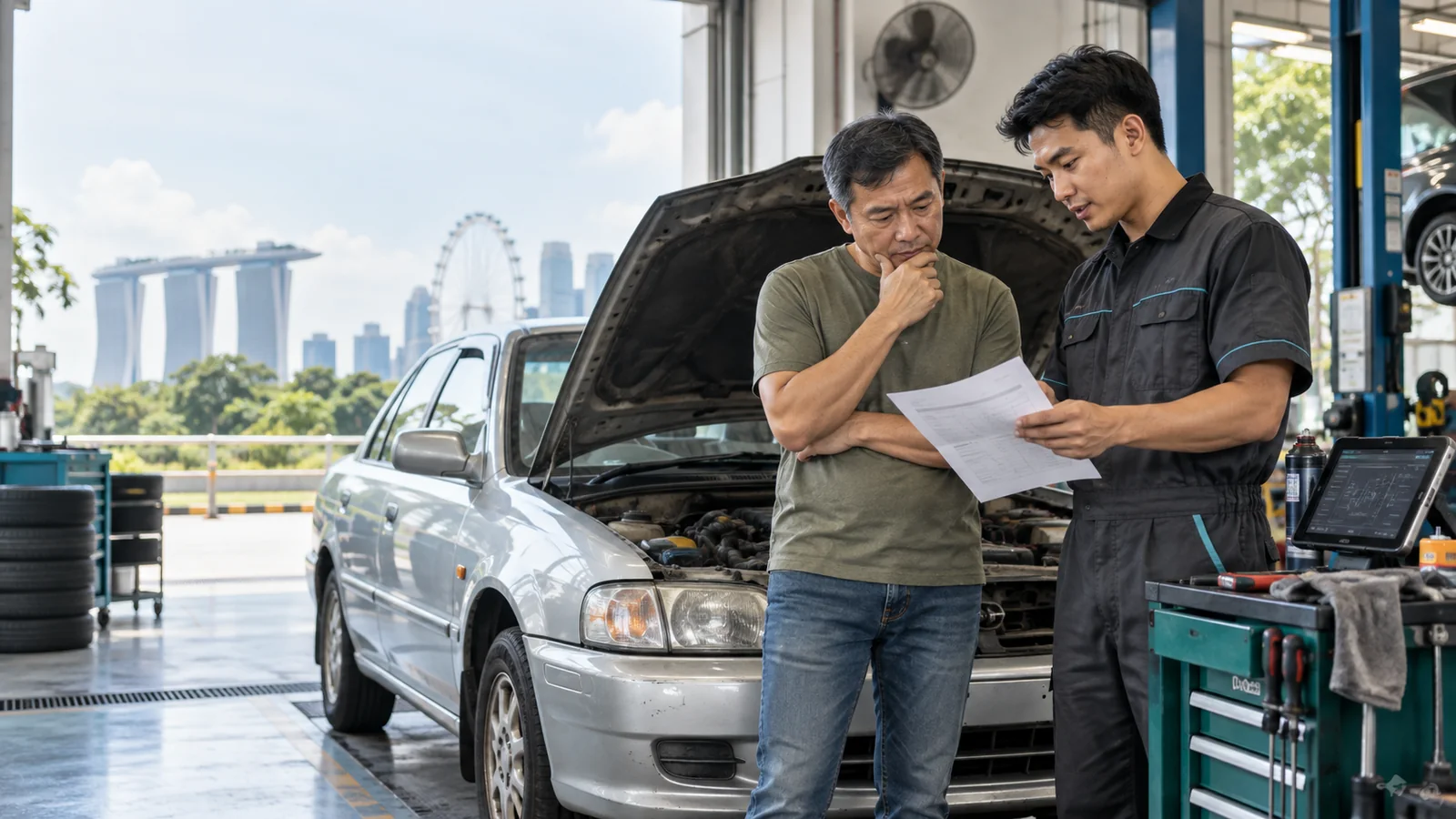

In Singapore, where the cost of car ownership is among the highest in the world, the end of a vehicle’s life is a significant financial event. When your car’s Certificate of Entitlement (COE) nears its 10-year mark, you face a critical decision: renew the COE or deregister and scrap the vehicle. Understanding the scrap car cost and the potential returns is essential for making an informed choice. This process can seem complex, but it offers a way to recover a portion of your initial investment.
This guide will demystify the value of a scrap car in Singapore. We will break down the components that determine how much money you get back, explore the factors that influence the scrap car rate, and walk you through the entire process. By the end, you’ll have a clear picture of how scrap car prices are calculated and how to maximize the value you receive for your vehicle.
The Key Components of Your Car’s Scrap Value
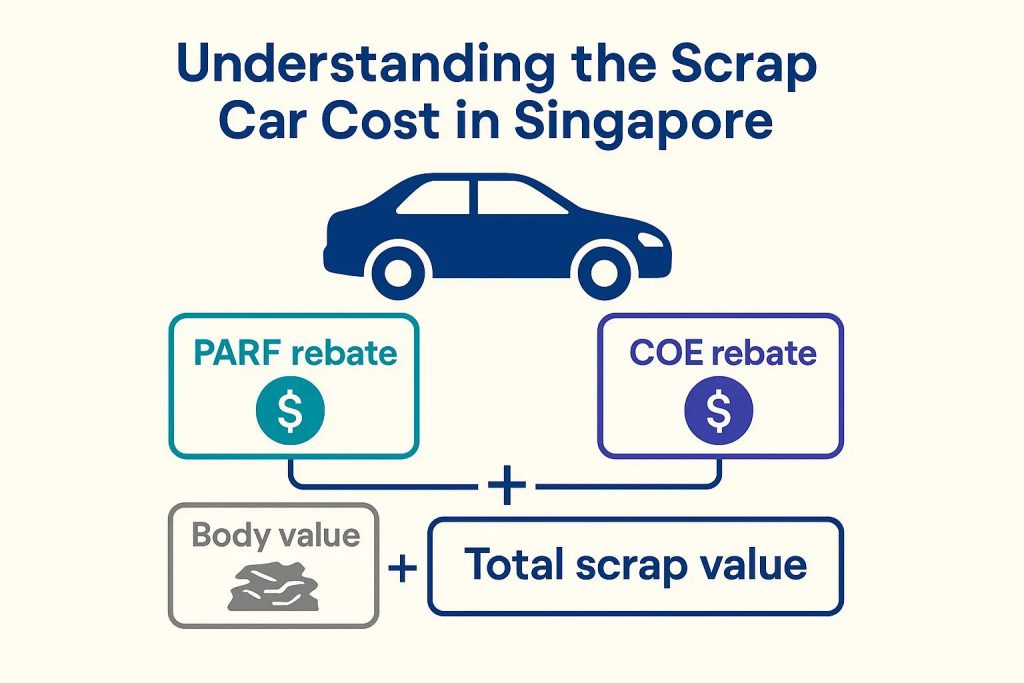
When you scrap your car in Singapore, the money you receive isn’t just a random figure. It is a calculated sum based on two primary components mandated by the Land Transport Authority (LTA): the COE rebate and the Preferential Additional Registration Fee (PARF) rebate. These two values form the bulk of your car’s total scrap value.
1. PARF Rebate
The Preferential Additional Registration Fee (PARF) is a benefit given to car owners who deregister their vehicles before the 10-year COE expires. It is a refund on a portion of the Additional Registration Fee (ARF) you paid when you first bought the car. The ARF is a tax imposed on all new vehicles, calculated based on the car’s Open Market Value (OMV).
The PARF rebate is calculated as a percentage of the ARF, and this percentage decreases as the car gets older. Here is the general structure:
- If the car is less than 5 years old, you receive 75% of the ARF.
- The percentage then reduces incrementally each year.
- For a car deregistered in its 10th year (but before the COE expires), the PARF rebate is typically 50% of the ARF.
If you choose to renew your COE for another 5 or 10 years, you forfeit the PARF rebate entirely. This makes the PARF rebate a significant incentive to deregister older cars and is a major factor in the final scrap value of your vehicle.
2. COE Rebate
The Certificate of Entitlement (COE) gives you the right to own and use a vehicle in Singapore for 10 years. If you decide to deregister your car before the COE’s expiry date, you are entitled to a rebate for the unused portion.
The calculation is straightforward: the COE rebate is the Quota Premium (QP) you paid for the COE, prorated to the number of months and days remaining on its 10-year term. For example, if you paid $50,000 for your COE and you scrap the car with exactly one year (12 months) left, your rebate would be approximately $5,000 ($50,000 / 120 months * 12 months). This rebate encourages owners to get older, less efficient cars off the road sooner.
Together, the PARF rebate and the COE rebate constitute the “paper value” of your car. This is the guaranteed amount you will get back from the LTA upon deregistration.
The Car Body: The “Forgotten” Component of Scrap Car Value
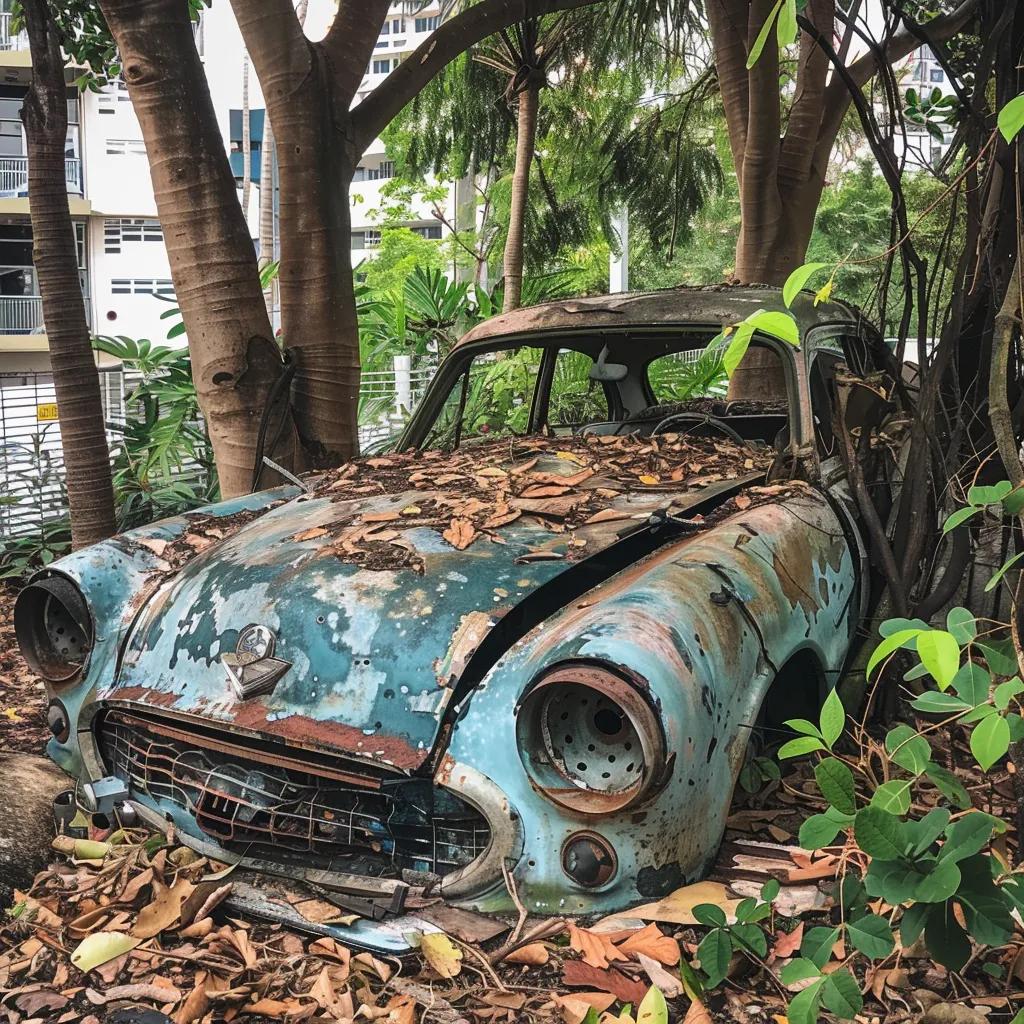
Beyond the LTA rebates, there is a third, often-overlooked component that influences the total cash you receive: the value of the car’s body. While the PARF and COE rebates form the paper value, the car body has its own market worth. This is the amount a scrapyard or vehicle exporter is willing to pay for the physical vehicle itself.
Several market factors determine the scrap rate for a car’s body. The primary factor is supply and demand. Specific models, especially popular Japanese brands like Toyota or Honda, are in high demand in overseas markets where they are exported as used cars. Exporters are willing to pay a higher price for these models because they can be easily resold in countries like Sri Lanka, Malaysia, or parts of Africa.
The car’s condition also plays a role. A vehicle with a well-maintained body, a clean interior, and functional parts will naturally command a better price than a car that is damaged or in poor condition. Even if the vehicle is not exported whole, its individual parts—the engine, gearbox, alternator, and other components—can be salvaged and sold, contributing to its overall scrap value.
This body value is where direct scrapyards and car exporters compete. The scrap rate for cars can fluctuate based on export demand, scrap metal prices, and foreign exchange rates. This is why it is crucial to get quotes from multiple sources to ensure you are getting the best possible price for your car’s body, which is paid on top of the LTA rebates you are due.
Step-by-Step Guide to Scrapping Your Car in Singapore
The process of scrapping a car in Singapore can be handled on your own or through a specialized agent. While the DIY route can save you a small amount in fees, using an agent simplifies the process significantly and ensures all paperwork is handled correctly. Here’s a typical breakdown of the steps involved when using a professional service.
1. Get a Quote: The first step is to shop around. Contact several reputable car scrapyards or dealers to obtain quotes. You will need to provide your vehicle’s license plate number. They will use this to retrieve your car’s details from the LTA system and calculate an all-in price that includes the PARF/COE rebates and the body value they are offering.
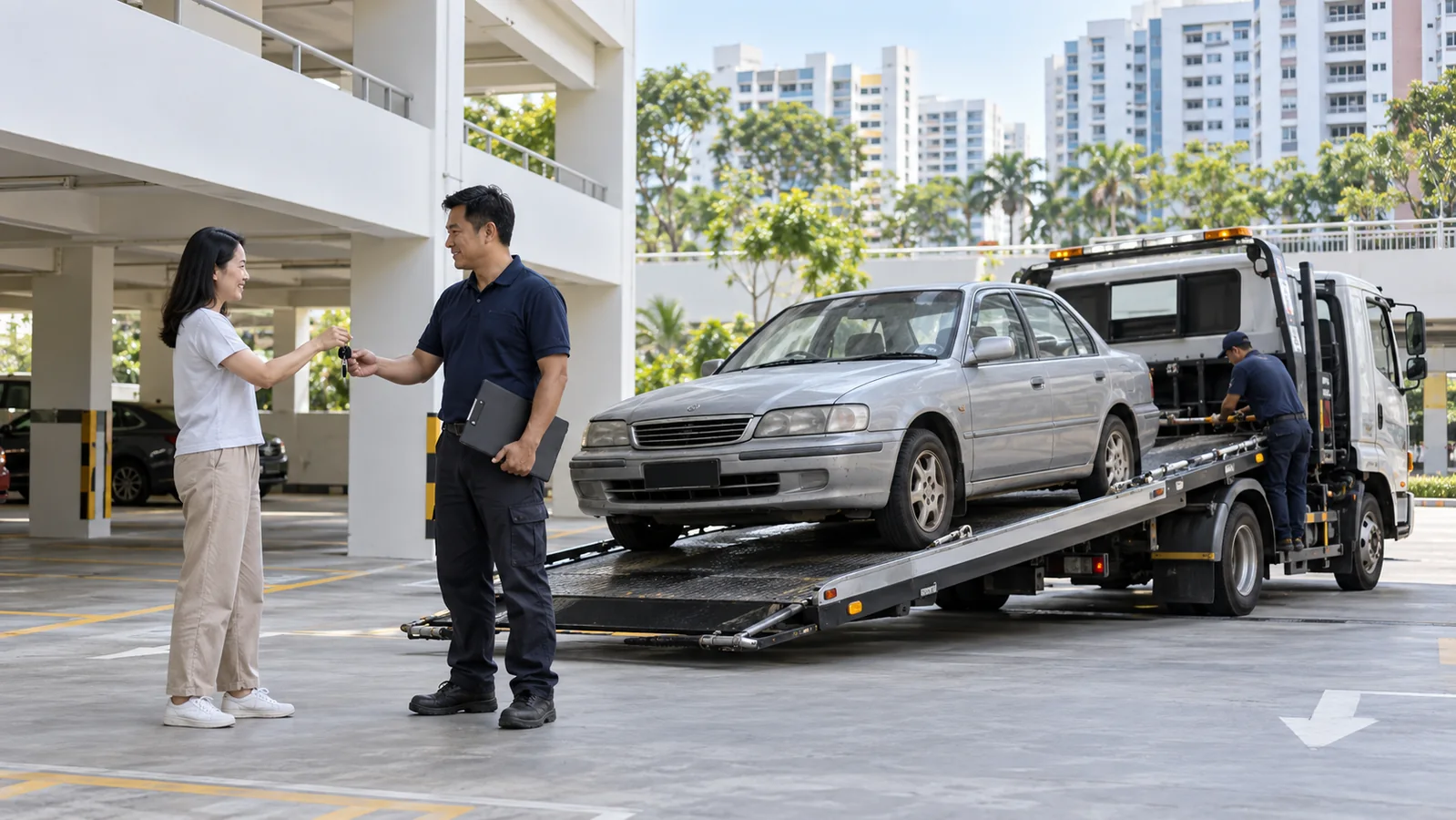
2. Arrange for Handover: Once you accept a quote, you will schedule an appointment to hand over the vehicle. The dealer will typically offer a free collection service from your location, which adds convenience. At the handover, the dealer will inspect the vehicle to confirm its condition.
3. Complete the Paperwork: You will need to sign the necessary sales agreement and transfer forms. The agent will handle the entire LTA deregistration process on your behalf. This includes submitting the application to the LTA and ensuring the vehicle is disposed of correctly at an LTA-approved scrapyard.
4. Receive Payment: Upon handover and completion of the paperwork, the dealer will pay you the agreed-upon amount for the car’s body. The LTA rebates (PARF and COE) will be processed and either mailed to you as a cheque from the LTA or transferred to your bank account, typically within a few weeks. Some dealers may offer to pay you the full sum upfront (paper value + body value) and collect the LTA rebates themselves, which can be a more convenient option.
5. Settle Outstanding Loans and Insurance: Remember to settle any outstanding car loans with your bank after the vehicle has been deregistered. You should also contact your insurance company to cancel your policy and request a refund for any unused portion of your premium.
Factors That Influence Scrap Car Prices
The total amount you receive for scrapping your car is not fixed. Several factors can influence the final scrap car prices, and understanding them can help you time your decision and maximize your return.
The Car’s Make and Model: As mentioned earlier, the demand for specific makes and models in export markets is the biggest driver of the car body’s value. Popular and reliable Japanese cars often fetch a higher body value than continental or less common models.
The Age of the Car: The PARF rebate decreases each year. Therefore, a car scrapped at 9 years old will have a higher PARF rebate than the same car scrapped at 9 years and 11 months old. While the difference might be slight every month, it is a factor to consider.
COE Quota Premium Trends: If COE prices have been rising, your COE rebate might be lower than that of a car bought when premiums were higher, even if both are scrapped with the same amount of time remaining. Conversely, if you purchased your car when COE prices were at a peak, your COE rebate will be more substantial.
Market Conditions: The scrap rate for car bodies is dynamic. Global scrap metal prices, export demand, and currency exchange rates influence it. A professional scrap car dealer stays on top of these trends and can offer you a competitive price based on the current market.
The Choice: Renew COE or Scrap?
The decision to scrap your car or renew its COE is a major financial one. There is no single correct answer, as it depends entirely on your personal circumstances, driving needs, and economic situation.
Scrapping your car can provide you with a significant lump sum from PARF and COE rebates. This money can be used as a down payment for a new or used car, or for other financial needs. Scrapping allows you to upgrade to a newer, more reliable, and potentially more fuel-efficient vehicle without the worry of escalating maintenance costs associated with an older car.
Renewing your COE, on the other hand, allows you to continue driving your current car without the high upfront cost of a new vehicle. You will have to pay the Prevailing Quota Premium (PQP), which is the moving average of COE prices in the last three months. By renewing, you permanently forfeit your PARF rebate. This option is often favored by those whose cars are still in good mechanical condition and who do not wish to take on a new car loan. However, you must be prepared for potentially higher maintenance and repair costs as the car ages further.
Maximizing Your Vehicle’s End-of-Life Value
Understanding the scrap car cost in Singapore empowers you to make a smart financial decision when your vehicle’s COE is nearing its end. The final scrap car value is a combination of the government-mandated PARF and COE rebates, plus the market-driven value of the car’s body. By getting multiple quotes from reputable dealers, you can ensure you receive the best possible scrap rate for your car. Weighing the immediate cash influx from scrapping against the cost of renewing your COE will help you choose the path that best suits your needs, ensuring you extract the maximum value from your automotive investment.
Frequently Asked Questions (FAQs)
1. How is the final scrap value of my vehicle calculated?
The scrap value of your vehicle is primarily calculated by adding three components: your PARF rebate (a percentage of the ARF paid), your COE rebate (the prorated value of your unused COE), and the car’s body value (the amount a scrapyard or exporter will pay for the physical car).
2. Can I scrap my car myself without using an agent?
Yes, you can handle the process yourself. This involves deregistering the vehicle through the LTA’s OneMotoring website, delivering the car to an LTA-approved scrapyard, and obtaining proof of disposal. However, most owners find it much more convenient to use an agent who handles all the logistics and paperwork for a small fee.
3. When is the best time to scrap my car?
The best time is just before your car’s 10-year COE expires. This maximizes your use of the car while still ensuring you are eligible for the full 50% PARF rebate. Scrapping it earlier will give you a higher PARF and COE rebate, but you lose out on the utility of the car.
4. What happens to the scrap cars prices if I renew my COE?
If you renew your COE, you forfeit your PARF rebate forever. When you eventually scrap the car after the renewed COE period, your scrap value will only consist of the rebate for the unused portion of the renewed COE, plus the car’s body value, which will be significantly lower due to the car’s advanced age.
5. How long does it take to receive my scrap value payment?
When you use a dealer, the payment for the car’s body is typically made on the spot upon handover. The PARF and COE rebates from the LTA are usually processed within 2-4 weeks and will be sent to you via cheque or direct bank transfer, unless the dealer has paid you this amount upfront.